In celebration of Christmas, purchase any LtQ curriculum edition today or tomorrow (12.10.13 & 12.11.13) and get 50% off! To place your order, simply go to our LtQ website, log in to your member account, and add the curriculum edition program(s) to your shopping cart. Then enter coupon code C5CE into the coupon code field on your shopping cart page to receive this special holiday discount.
To be directed to our complete curriculum listings page, please CLICK HERE.
Please Note: You must be logged in to your member account when placing your order/entering the coupon code for the coupon code to be recognized and the discount to be deducted. If you do not have a member account set up, please do so at Create an Account prior to placing your order.
SMALL PRINT: Applies only to adult curriculum edition products purchased from livingthequestions.com. Must enter coupon code to receive discount. Offer valid through 11:59 p.m. Central, Dec 11, 2013. Not valid on previous orders or combined with any other promotional offers.
HAPPY HOLIDAYS FROM YOUR FRIENDS AT LTQ AND MANY THANKS FOR YOUR CONTINUED SUPPORT!
About the best we can say of Christopher Columbus anymore is that he was a cheapskate. On his 1492 voyage, he promised a reward to whoever spotted land first. Hooray for sailor Rodrigo de Triana, right? Nope. Columbus claimed he had seen a “glow” the night before and gave the reward to himself.
The bottom line is that what we know now about the man should be enough to make even the most ardent “Knight of Columbus” feel ashamed – and it’s not PC revisionism of Columbus’ reputation, either. His own journals and logs reveal a man who, even by the standards of his own day, was more opportunistic monster than heroic explorer.
The one who many still celebrate for “discovering” America was, in fact, a heartless slave trader who brutalized and enslaved whole villages in an effort to lessen the effects of his failure to find a new trade route to the Indies.
As it turns out, the “Columbus sailed the ocean blue” song we sang as children needs a few new verses. One might be about how he murdered countless natives. Another might be how he also dealt in child prostitution, giving his sailors the perk of 9 and 10 year old girls for their amusement. His reputation was so grim that, upon the approach of any Europeans, natives poisoned their own children and then committed suicide rather than face whatever torture was in store for them.
But he was not totally without scruples. Because the Catholic church forbade enslaving of Christians, he made sure not to baptize any of the natives he was selling into slavery.
Columbus’ own contemporaries despised him. As governor of Santo Domingo on Hispaniola, he was a despot who kept all the profits for himself, A number of attempts were made on his life and at one point he was actually arrested and sent back to Spain in chains for crimes against humanity. Good thing for him he brought a lot of gold and bought off the King and Queen, who pardoned him so he could get back to work.
We’ve got universities, companies, networks, rivers, whole countries named after this man. But most folks don’t have a clue as to the real nature of who he was and the horrific nature of his actions. Any claim he might have once had to being a brave explorer is eclipsed by the reality of the inhumanity he visited upon his fellow humans.
Like many holidays that involve a day off for Americans, most people either don’t care or downplay the origin of the celebration of Columbus Day. Good thing he was a Christian! Imagine how bad he would’ve been if he wasn’t following Jesus.
Considering Jesus’ summary of the Jewish Law and Prophets: “You shall love the Lord your God with all your heart, soul, mind and strength; and you shall love your neighbor as yourself,” it begs the question: how do we get from Jesus to Columbus? Or from Jesus to Jim Jones? Or from Jesus to any of us, for that matter?
A part of the reason is because Christianity has, for nearly two millennia, functioned out of an imperialistic mindset. Bent on conquering the other more than “loving” the other (along with the warped sense that coercing people into belief was a form of loving them…), Christianity has helped make tyrants like Columbus possible. For much of its history, the only thing Jesus would recognize about Christianity is that it functions with the same MO as the Roman economic, political, and military machine that led to his execution.
Jesus was pretty clear about the principle of “Loving your neighbor as yourself.” He even clarified that this included one’s enemies. In Romans, Paul even looked at it from the other direction: “If it hurts your neighbor, don’t do it.”
But 2000 years of putting “conquering in Jesus’ name” at the top of your list is a hard habit to break. Being “right” and showing others how “wrong” they are is still at the heart of many people’s core Christian beliefs.
“Answers in Genesis” Times Square Billboard
In keeping with their usual adolescent taunts of those with whom they disagree, Ken Ham and the folks at Answers in Genesis have invested in a billboard (see photo at left) that says way more about their having been compromised by imperialist culture than anything about Jesus. Their “To our atheist friends: Thank God You’re Wrong” message is not love. It’s not neighborly. It’s shallow, arrogant, and reinforces the very un-Jesusy notion that Christianity is about being right. Plus, it’s just downright embarrassing.
If our “friends” at Answers in Genesis were really paying attention to Jesus’ teachings instead of trying to conquer “the other,” they would be seeking ways to enter into conversation rather than taking very expensive cheap shots at their perceived enemies. If they were paying attention they would know that even Carl Sagan, poster child for atheists everywhere, said “For small creatures such as we, the vastness is bearable only through love.”
Even atheists know that in the final analysis, it’s about love! And isn’t that the starting point for any conversation that moves us forward as a community, as a civilization?
Despite what we learned as children, we know now that Columbus in large part used Christianity as a means toward satiating his personal greed for power and influence. Sadly, Christians like those at “Answers in Genesis” still function out of a similar imperialist mindset. Despite what many of us learned as children, Christianity is not about us-vs-them, conquering “the other,” and triumphing over “false” ideas. It’s about love – and not a rainbows and unicorns kind of superficial love – but a love that does the hard work of engaging those with whom we disagree for the shared purpose of working toward the common good.
Christians were originally called “people of the way,” people who followed the example of Jesus in making love of neighbor (and enemy) a way of life. As followers of Jesus, can we ever recover from thousands of years of having been compromised by dualism, violence, and the lust for power? Maybe we could start with a blogpost that cleverly disses our “friends” at Answers in Genesis by comparing them and their motives to Columbus’ reign of terror. Or maybe not.
This kind of thing doesn’t happen every day (or even every YEAR!), so don’t miss your chance to snag that LtQ program you’ve been meaning to roll out in your church or study group! ONE DAY ONLY: Wednesday, Sept. 4th, 2013
“I’ve lead most of the LTQ courses. Each time people are energized by learning that they don’t have to believe in impossible things, just live a life rooted in the love, compassion and justice embodied in Jesus.” — R.H. in Austin (via Facebook)
“Living the Questions is a breath of fresh air in the crazy world of contemporary religious thought. It will refresh, renew, challenge, inspire and sometimes drive you to a fine glass of red wine. LTQ literally changed my life!” — S.S. in Ohio (via Facebook)
“LtQ2 both broadened and deepened our Christian Formation studies at my church in Atlanta. We could watch the confining bonds of literalism fall from the consciousnesses around us as we could once again view the numinous through our liturgies. Awesome materials.” — M.D. in Atlanta (via Facebook)
NOTE: Offer applies only to DVD curriculum purchased from the livingthequestions.com website and is not valid on previous orders or combined with any other promotional offers. Offer valid through 11:59 pm, Central, September 4th, 2013. To receive the discount, you must create a member account or be logged in to your member account and enter the code: 1YRLTQ
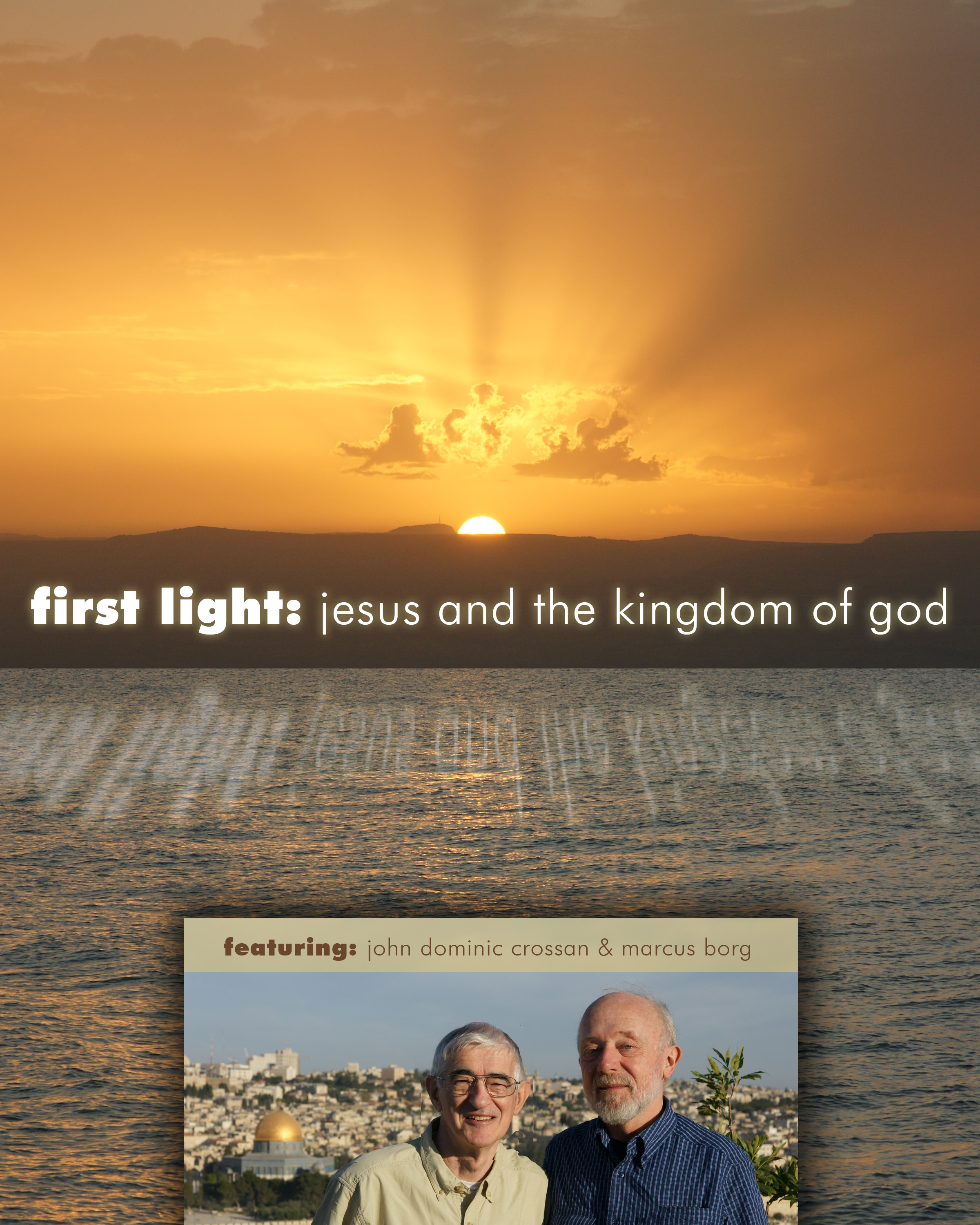
As fast food workers strike across the U.S., the idea of structural injustice takes center stage: low-wage fast food workers are pitted against owners who feel confident that if their current employees are unhappy, there are plenty of other people who are desperate enough to take the non-living wages they offer without complaint. Jesus had something to say about that. In First Light, Living the Questions’ DVD curriculum on “Jesus and the Kingdom of God,” Dom Crossan and Marcus Borg explore the culture and times in which Jesus lived. For Labor Day here in the U.S., here’s an excerpt from the participant guide: John Dominic Crossan reflecting on the structural injustices that Jesus is critiquing in the parable of The Vineyard Workers.
THE VINEYARD WORKERS.
Imagine, for example, how that process worked in an oral delivery of the Vineyard Workers in Matthew 20:1-16. It is harvest time in the vineyards and a landowner goes to the marketplace to hire day laborers. But instead of hiring all he needed at once, he went out five times—at 6am, 9am, 12 noon, 3pm, and 5pm. (Are you already sensing a comment on his character in that procedure?).
At the end of the day, all alike are given a silver denarius for a full day’s pay. They grumble immediately about the landowner’s injustice. And, from Matthew on, we tend to focus on that problem of personal and individual justice or injustice. Was it fair? Was the owner equitably generous or provocatively condescending? And in focusing there, we do not focus elsewhere.
But think about this interchange: “About five o’clock he went out and found others standing around; and he said to them, ‘Why are you standing here idle all day?’ They said to him, ‘Because no one has hired us.’ He said to them, ‘You also go into the vineyard’” (20:6-7). How would Jesus’ listeners—especially poor day-laborers—have responded to that interaction? Would nobody from the oral audience have objected to such a blatant blaming the victim? Would nobody have protested that looking for work all day was not laziness?
What would have happened in such a discussion was a raising of the audience’s consciousness on the difference between, in our language, personal and individual justice or injustice as against systemic or structural justice and injustice. Why did it happen mysteriously that, even at high harvest in the vineyards when labor should have cost top denarius, day-laborers were still looking for work at the end of the day? And, of course, the owner knew that situation full well since he had tried all day to have just the amount of labor needed and no more. He knew he could go out as late as 5pm and still find workers. How did things happen just as the landowners wanted?
The audience would have been lured by that story into thinking, debating, and understanding the crucial distinction between individual charity (a denarius for each) and structural justice (no work for all), and in that collaborative process they would—Jesus hoped and intended—begin the collaborative process of eschatological transformation with a God of distributive justice.
First Light is a 12-session DVD and web-based study of the historical Jesus and the Kingdom of God. Follow John Dominic Crossan and Marcus Borg, two of the world’s leading Jesus scholars, on location throughout the Galilee and Jerusalem as they ask, “Why did Jesus happen when he happened?” “Why the tiny villages around the Lake?” “Why were the titles of Caesar Augustus — Divine, Son of God, God from God, Lord, Redeemer, Liberator, and Savior of the World — taken from a Roman emperor and given to a Jewish peasant?”
John Dominic Crossan says that First Light “is all I have to say about Jesus after half a century of study — in succinct summary.”
John Dominic Crossan is one of the world’s most respected Jesus scholars and author of numerous books, including “Jesus, a Revolutionary Biography” & “God and Empire: Jesus Against Rome, Then and Now.” He is featured in a number of Living the Questions programs, including “First Light” and “Eclipsing Empire.” In 2012, Crossan served as the President of the Society of Biblical Literature (SBL)
Don’t miss John Shuck’s “Religion for Life” interview with David Felten, one of the co-creators of Living the Questions:
Click HERE or on the graphic above to listen to the podcast
Among a variety of topics in this podcast, Felten and Shuck discuss how clergy have not been honest with laity about what is being taught in seminary and academia and how hesitant many clergy are at letting the cat out of the bag about the Jesus of history. This is part of Shuck’s current series on The Future of Faith featuring interviews with Marcus Borg, Val Webb, Lloyd Geering, Matthew Fox, and many others.
If you’ve ever been in conversation and had to fumble to try and describe exactly what “Progressive” Christianity is, then you’ll find some succinct answers in this wide-ranging conversation.
Religion For Life is an educational program that explores the intersection of religion, social justice and public life. It features interviews with local and national figures from a variety of religious traditions and from a variety of perspectives, and addresses the effects of religion – both positive and negative — on public life.
The host of the program is the Reverend John Shuck, a Presbyterian minister for 21 years and currently the minister at the First Presbyterian Church of Elizabethton, Tennessee. Prior to entering the ministry, Shuck was a radio broadcaster at stations in Boise, Idaho and Seattle, Washington. Shuck’s website is HERE and podcasts are available by heading over to PODOMATIC.
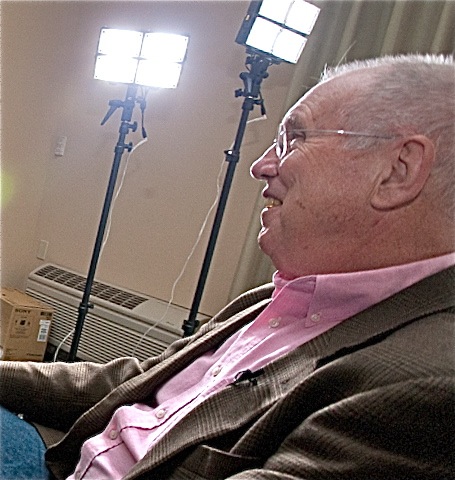
Co-creator of Living the Questions, Rev. David Felten, was interviewed this week for the nationally syndicated radio show, “Culture Shocks” with Rev. Barry Lynn. Lynn is an ordained UCC pastor, constitutional lawyer, noted activist, and longstanding civil libertarian. For over twenty years, he has served as the executive director for Americans United for the Separation of Church and State, a nonpartisan organization dedicated to preserving the constitutional principle of church-state separation as the only way to ensure religious freedom for all Americans. David serves on the board of his local chapter of AU in Phoenix, Arizona. The interview was aired on Monday, June 10th and will be available streaming online by clicking on the graphic above or HERE, the Culture Shocks website.
“The time has come and is long-since past” to abandon “the idea that God is ‘in control’.” It is an idea “so troublesome as to be utterly useless. But to think of the Divine as that power called love, the one who “suffers with” and comforts the afflicted regardless of the outcome, has spiritual integrity born of real life experience.”
In Rabbi Harold S Kushner’s “book, The Lord is My Shepherd: Healing Wisdom of the Twenty-Third Psalm, the rabbi notes that ‘in times of trouble, God does not explain, God comforts.’ Through grace, suffering makes compassion possible, and what is more central to the life of faith than striving to be more compassionate?”
“Most people in church grew up listening to those who claimed to have all the answers. Who knew that the questions were more interesting, that ‘living’ them is true faithfulness. Felten and Procter-Murphy have given the class such superb resources that no one is in a hurry to graduate.”
— Dr. Robin R. Meyers, Senior Minister, Mayflower Congregational UCC Church; Professor of Rhetoric, Oklahoma City University
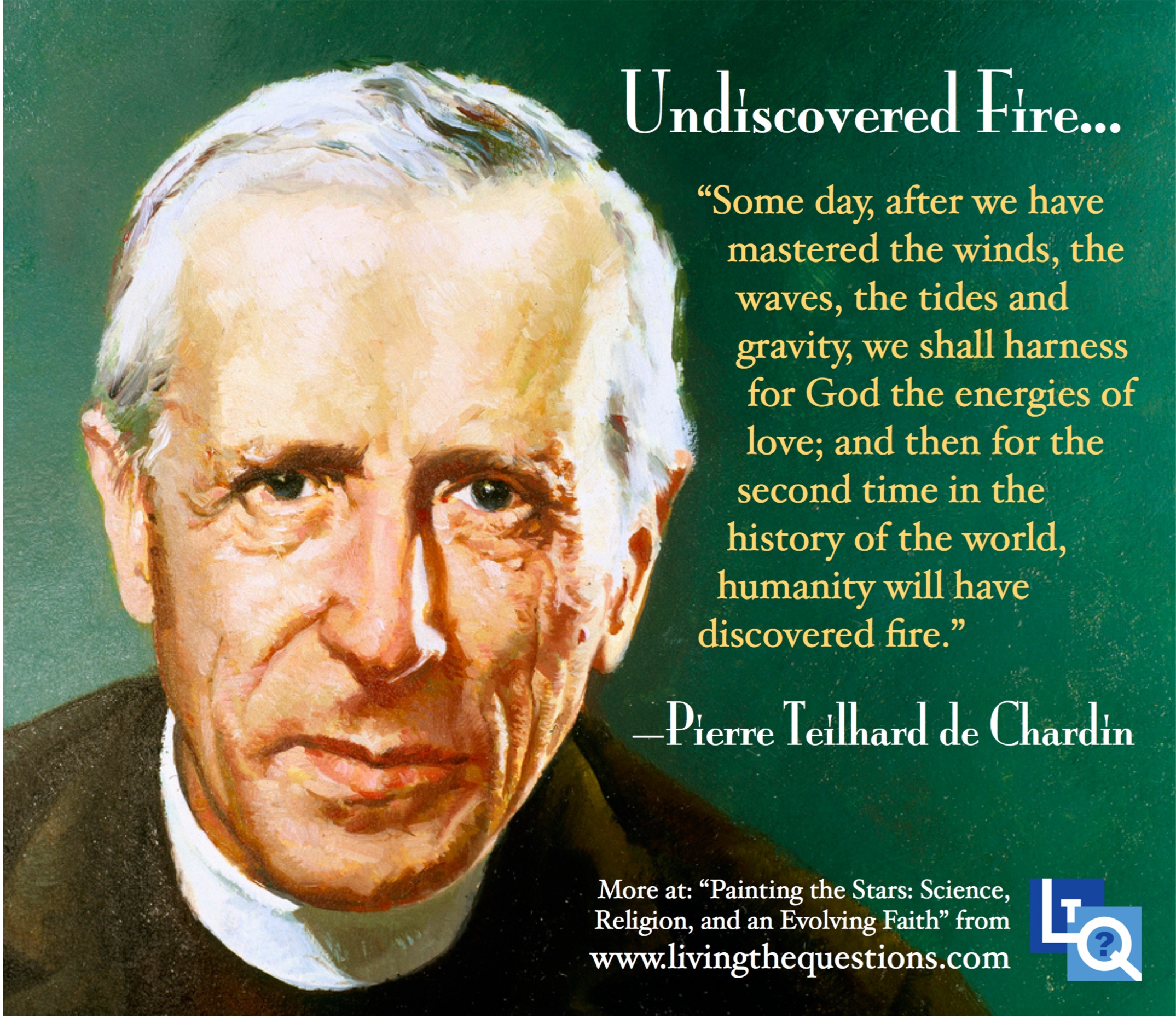
“Some day, after we have mastered the winds, the waves, the tides and gravity, we shall harness for God the energies of love; and then for the second time in the history of the world, humanity will have discovered fire.”
— Pierre Teilhard de Chardin
Painting the Stars is Living the Questions’ new series celebrating the communion of science and faith andexploring the promise of an evolutionary Christian spirituality. It features a dozen leading theologians and leaders in the area of evolutionary spirituality and a participant guide by author and evolutionary theologian, Bruce Sanguin. Watch for it in the summer of 2013! Find out more at Living the Questions.
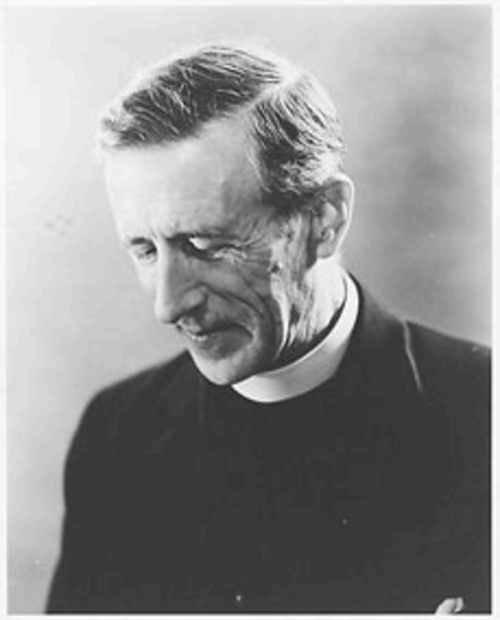
Pierre Teilhard de Chardin was a Jesuit priest and philosopher who trained as a paleontologist and geologist. Many of his ideas came into conflict with the Catholic Church, particularly regarding the doctrine of Original Sin, his views concerning the origin of humanity, and his teaching of evolutionary theory. To limit his influence, the French Jesuits sent him as far away as they could, which at the time was China. Little did they know that he would fall in with a group of scientists who were on the verge of an archaeological breakthrough: the discovery of Peking Man (which only enhanced Teilhard’s reputation). For his work and publications, he was reprimanded, his works were condemned by the Holy Office, and he remained in relative obscurity during his lifetime.
Bernard Brandon Scott doesn’t need a personal God — he needs people…
“I get people who say, ‘Well, don’t you need a personal God?’ I don’t have a problem with God language; I have a problem with the reification of God language. God language is the way we talk about these ultimate values, for me. I don’t need a personal God. I DO need other people to relate to — and it’s that relationship with other people that is God. Now, that won’t pass the creedal test, but I’m not worried.”
Vocabulary note:
“Reification” = from Latin res “thing” + facere “to make.” Reification can be loosely translated as “thing-making;” the turning of something abstract into a concrete thing or object.
Also known as concretism (or the fallacy of misplaced concreteness), reification is a fallacy of ambiguity, when an abstraction (abstract belief or hypothetical construct) is treated as if it were a concrete, real event, or physical entity. In other words, it is the error of treating as a concrete thing something which is not concrete, but merely an idea. For example: if the phrase “fighting for justice” is taken literally, justice would be reified.
Bernard Brandon Scott is Darbeth Distinguished Professor of New Testament at the Phillips Theological Seminary in Oklahoma. He is a charter member of The Jesus Seminar, co-chair of the Bible in Ancient and Modern Media Section of the Society of Biblical Literature, and a consultant to the American Bible Society experimental film translations. He is the author of a number of books, including Re-Imagine the World, Hear Then the Parable, and The Trouble with Resurrection.
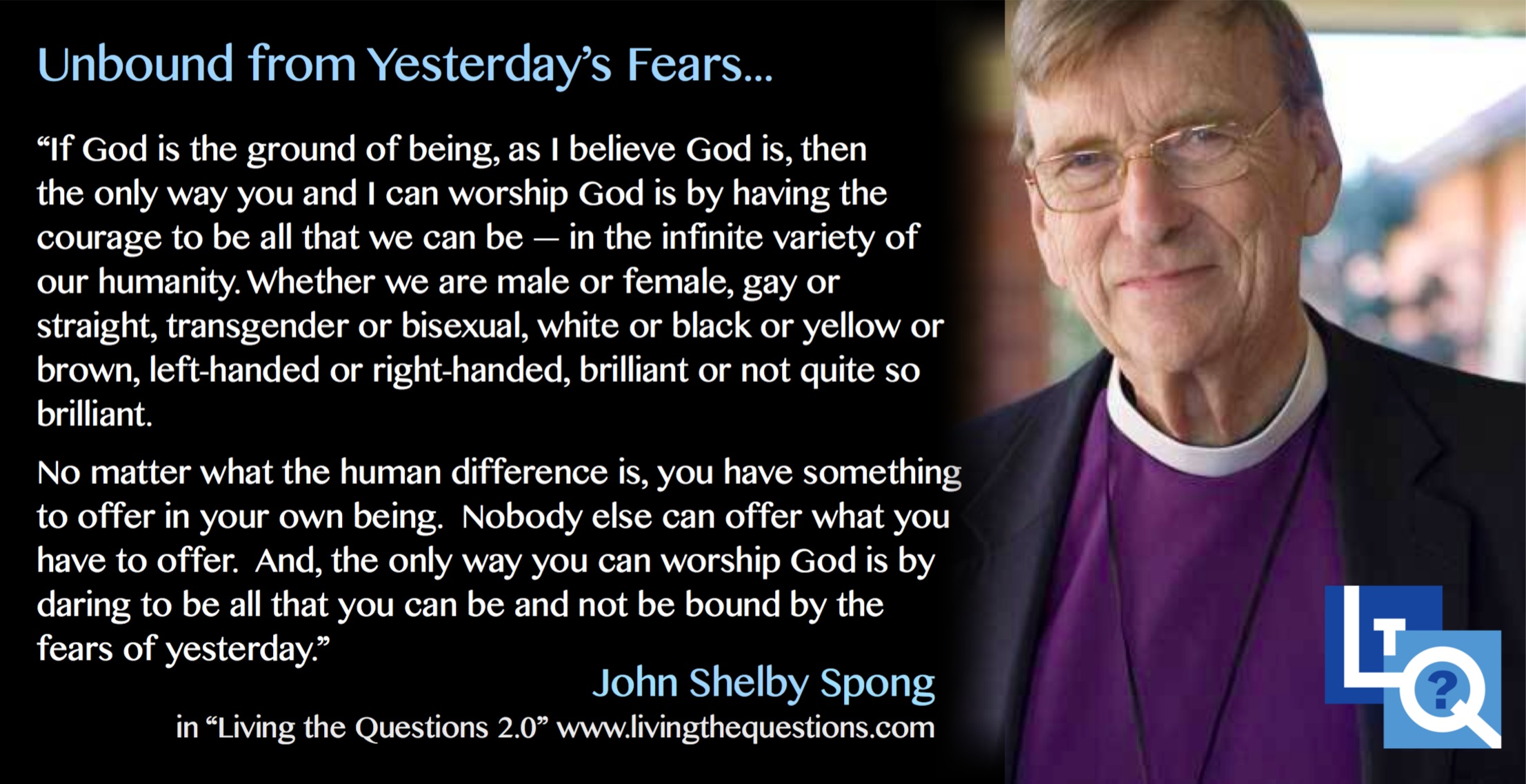
“If God is the ground of being, as I believe God is, then the only way you and I can worship God is by having the courage to be all that we can be — in the infinite variety of our humanity. Whether we are male or female, gay or straight, transgender or bisexual, white or black or yellow or brown, left-handed or right-handed, brilliant or not quite so brilliant.
No matter what the human difference is, you have something to offer in your own being. Nobody else can offer what you have to offer. And, the only way you can worship God is by daring to be all that you can be and not be bound by the fears of yesterday.”
The retired Bishop of Newark, New Jersey, John Shelby Spong is one of the featured contributors in several Living the Questions series. He is a columnist and author of over sixteen books including Rescuing the Bible from Fundamentalism and Why Christianity Must Change or Die. Lecturer at Harvard, Humanist of the Year, and a guest on numerous national television broadcasts including The Today Show, Politically Incorrect with Bill Maher, and Larry King Live, Bishop Spong continues to write and lecture around the world. His newest book is The Fourth Gospel: Tales of a Jewish Mystic.
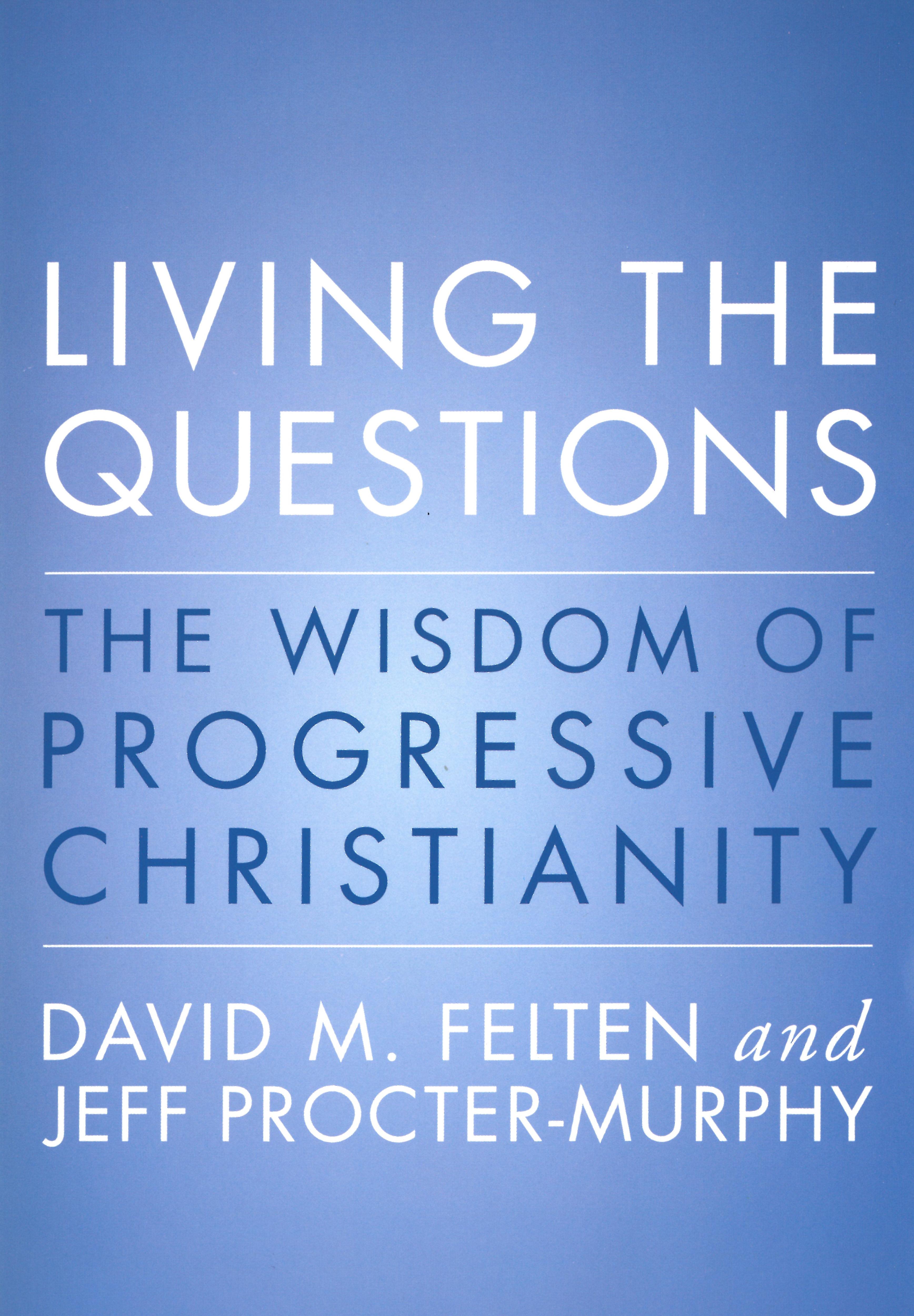
Pastors David Felten and Jeff Procter-Murphy, along with the voices of top Bible scholars and church leaders—including Marcus Borg, Diana Butler Bass, John Dominic Crossan, Helen Prejean, and John Shelby Spong—provide a primer to a church movement that encourages every Christian to “live the questions” instead of “forcing the answers.”
Based on the bestselling DVD course, "Living the Questions: The Wisdom of Progressive Christianity" tackles issues of faith, dogma, and controversial subjects that many churches are afraid to address. "Living the Questions" is the most comprehensive survey of progressive Christianity in existence today.
Available at www.livingthequestions.com, through online booksellers, and as a Kindle download!
“A welcome book that is bold (without being contentious) and courageous (without needing to be triumphant), Felten and Procter-Murphy give voice to a faith that provides a profound alternative to the dominant ideology of ‘American Christianity.’ Attention should be paid!”
— WALTER BRUEGGEMANN, PROFESSOR EMERITUS, COLUMBIA THEOLOGICAL SEMINARY

 In celebration of Christmas, purchase any LtQ curriculum edition today or tomorrow (12.10.13 & 12.11.13) and get 50% off! To place your order, simply go to our LtQ website, log in to your member account, and add the curriculum edition program(s) to your shopping cart. Then enter coupon code C5CE into the coupon code field on your shopping cart page to receive this special holiday discount.
 As it turns out, the “Columbus sailed the ocean blue” song we sang as children needs a few new verses. One might be about how he murdered countless natives. Another might be how he also dealt in child prostitution, giving his sailors the perk of 9 and 10 year old girls for their amusement. His reputation was so grim that, upon the approach of any Europeans, natives poisoned their own children and then committed suicide rather than face whatever torture was in store for them.









 Living the Questions
You must be logged in to post a comment.