This kind of thing doesn’t happen every day (or even every YEAR!), so don’t miss your chance to snag that LtQ program you’ve been meaning to roll out in your church or study group! ONE DAY ONLY: Wednesday, Sept. 4th, 2013
“I’ve lead most of the LTQ courses. Each time people are energized by learning that they don’t have to believe in impossible things, just live a life rooted in the love, compassion and justice embodied in Jesus.” — R.H. in Austin (via Facebook)
“Living the Questions is a breath of fresh air in the crazy world of contemporary religious thought. It will refresh, renew, challenge, inspire and sometimes drive you to a fine glass of red wine. LTQ literally changed my life!” — S.S. in Ohio (via Facebook)
“LtQ2 both broadened and deepened our Christian Formation studies at my church in Atlanta. We could watch the confining bonds of literalism fall from the consciousnesses around us as we could once again view the numinous through our liturgies. Awesome materials.” — M.D. in Atlanta (via Facebook)
NOTE: Offer applies only to DVD curriculum purchased from the livingthequestions.com website and is not valid on previous orders or combined with any other promotional offers. Offer valid through 11:59 pm, Central, September 4th, 2013. To receive the discount, you must create a member account or be logged in to your member account and enter the code: 1YRLTQ
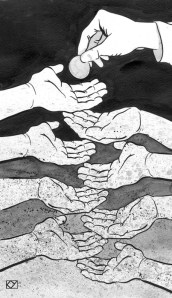
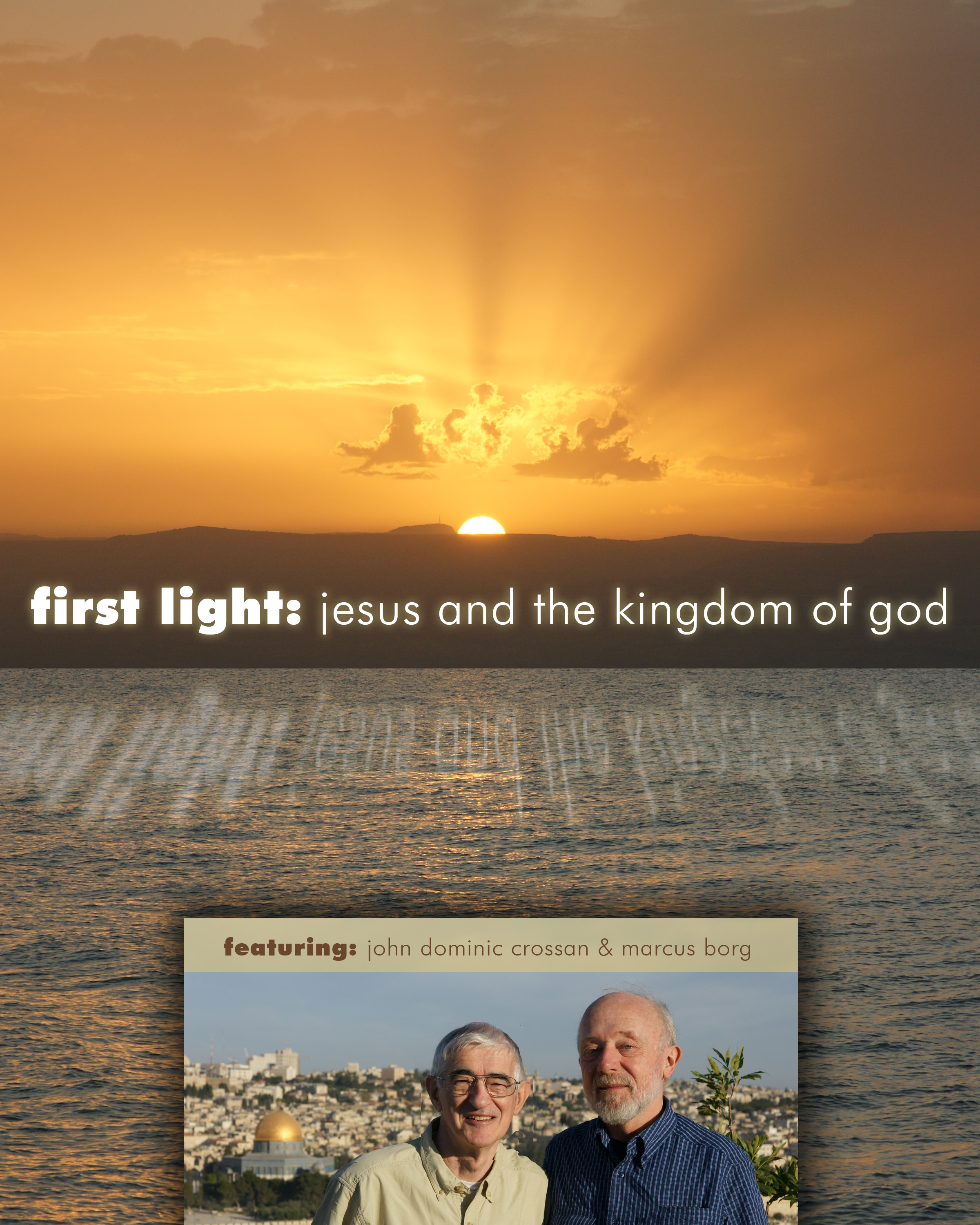
As fast food workers strike across the U.S., the idea of structural injustice takes center stage: low-wage fast food workers are pitted against owners who feel confident that if their current employees are unhappy, there are plenty of other people who are desperate enough to take the non-living wages they offer without complaint. Jesus had something to say about that. In First Light, Living the Questions’ DVD curriculum on “Jesus and the Kingdom of God,” Dom Crossan and Marcus Borg explore the culture and times in which Jesus lived. For Labor Day here in the U.S., here’s an excerpt from the participant guide: John Dominic Crossan reflecting on the structural injustices that Jesus is critiquing in the parable of The Vineyard Workers.
THE VINEYARD WORKERS.
Imagine, for example, how that process worked in an oral delivery of the Vineyard Workers in Matthew 20:1-16. It is harvest time in the vineyards and a landowner goes to the marketplace to hire day laborers. But instead of hiring all he needed at once, he went out five times—at 6am, 9am, 12 noon, 3pm, and 5pm. (Are you already sensing a comment on his character in that procedure?).
At the end of the day, all alike are given a silver denarius for a full day’s pay. They grumble immediately about the landowner’s injustice. And, from Matthew on, we tend to focus on that problem of personal and individual justice or injustice. Was it fair? Was the owner equitably generous or provocatively condescending? And in focusing there, we do not focus elsewhere.
But think about this interchange: “About five o’clock he went out and found others standing around; and he said to them, ‘Why are you standing here idle all day?’ They said to him, ‘Because no one has hired us.’ He said to them, ‘You also go into the vineyard’” (20:6-7). How would Jesus’ listeners—especially poor day-laborers—have responded to that interaction? Would nobody from the oral audience have objected to such a blatant blaming the victim? Would nobody have protested that looking for work all day was not laziness?
What would have happened in such a discussion was a raising of the audience’s consciousness on the difference between, in our language, personal and individual justice or injustice as against systemic or structural justice and injustice. Why did it happen mysteriously that, even at high harvest in the vineyards when labor should have cost top denarius, day-laborers were still looking for work at the end of the day? And, of course, the owner knew that situation full well since he had tried all day to have just the amount of labor needed and no more. He knew he could go out as late as 5pm and still find workers. How did things happen just as the landowners wanted?
The audience would have been lured by that story into thinking, debating, and understanding the crucial distinction between individual charity (a denarius for each) and structural justice (no work for all), and in that collaborative process they would—Jesus hoped and intended—begin the collaborative process of eschatological transformation with a God of distributive justice.
First Light is a 12-session DVD and web-based study of the historical Jesus and the Kingdom of God. Follow John Dominic Crossan and Marcus Borg, two of the world’s leading Jesus scholars, on location throughout the Galilee and Jerusalem as they ask, “Why did Jesus happen when he happened?” “Why the tiny villages around the Lake?” “Why were the titles of Caesar Augustus — Divine, Son of God, God from God, Lord, Redeemer, Liberator, and Savior of the World — taken from a Roman emperor and given to a Jewish peasant?”
John Dominic Crossan says that First Light “is all I have to say about Jesus after half a century of study — in succinct summary.”
John Dominic Crossan is one of the world’s most respected Jesus scholars and author of numerous books, including “Jesus, a Revolutionary Biography” & “God and Empire: Jesus Against Rome, Then and Now.” He is featured in a number of Living the Questions programs, including “First Light” and “Eclipsing Empire.” In 2012, Crossan served as the President of the Society of Biblical Literature (SBL)
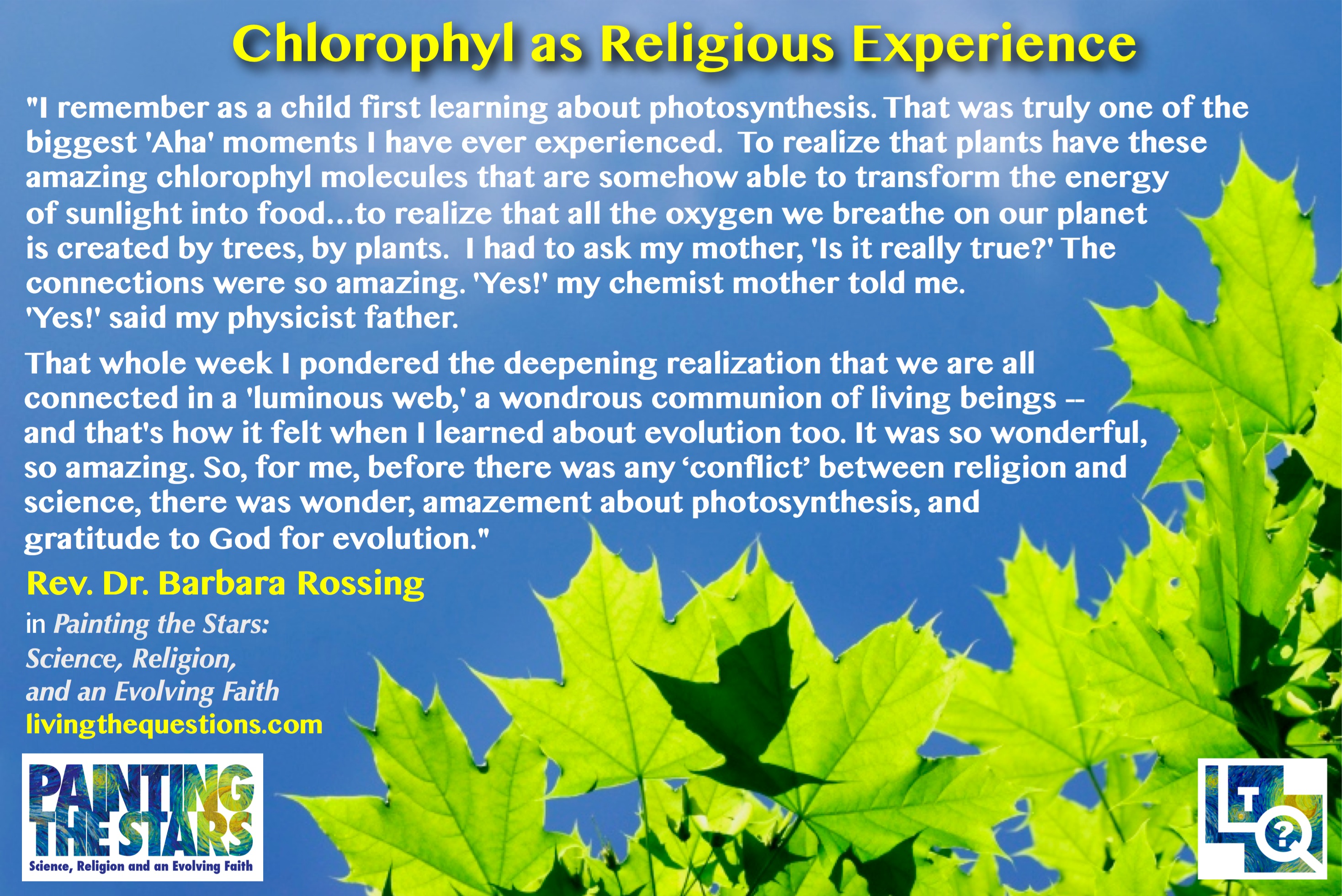
“I remember as a child first learning about photosynthesis. That was truly one of the biggest ‘Aha’ moments I have ever experienced. To realize that plants have these amazing chlorophyl molecules that are somehow able to transform the energy of sunlight into food…to realize that all the oxygen we breathe on our planet is created by trees, by plants. I had to ask my mother, ‘Is it really true?’ The connections were so amazing. ‘Yes!’ my chemist mother told me. Yes!’ said my physicist father.
That whole week I pondered the deepening realization that we are all connected in a ‘luminous web,’ a wondrous communion of living beings — and that’s how it felt when I learned about evolution too. It was so wonderful, so amazing. So, for me, before there was any ‘conflict’ between religion and science, there was wonder, amazement about photosynthesis, and gratitude to God for evolution.”
Celebrating the communion of science and faith, Painting the Starsfeatures over a dozen leading theologians and progressive thinkers in a seven-session program that explores the promise of evolutionary Christian spirituality.
Living the Questions contributor, Rev. Dr. Barbara Rossing
Barbara Rossing is Professor of New Testament at the Lutheran School of Theology at Chicago. Her publications include The Rapture Exposed: The Message of Hope in the Book of Revelation, a critique of fundamentalist “Left Behind” theology and articles and book chapters on ecology. She serves on the executive committee and council of the Lutheran World Federation, where she also chairs the Lutheran World Federation’s theology and studies committee. She has contributed to a number of Living the Questions series, including Living the Questions 2.0and Saving Jesus Redux
Tex Sample asks, “I often wonder where the people who are marginalized in the world, where the people who are poor, where the people who are outcast, can find those that they can trust. Is it you? Is it me? Can it be the church?”
Allan Knight Chalmers
Martin Luther King, Jr.
Allan Knight Chalmers was a Professor of Preaching at Boston University School of Theology and a mentor to Martin Luther King, Jr. While at Boston University, Chalmers was the president of the NAACP Legal Defense Fund and was involved in Civil Rights struggles and Civil Rights action all over the United States. It was professors like Chalmers and Dean Walter Muelder who intentionally sought out African American students from the South to train them for the Civil Rights challenges that were to come. During his tenure at Boston University, Dean Muelder was responsible for the training of more African American PhD students than any single university in the country. One of those was Dr. King.
Don’t miss John Shuck’s “Religion for Life” interview with David Felten, one of the co-creators of Living the Questions:
Click HERE or on the graphic above to listen to the podcast
Among a variety of topics in this podcast, Felten and Shuck discuss how clergy have not been honest with laity about what is being taught in seminary and academia and how hesitant many clergy are at letting the cat out of the bag about the Jesus of history. This is part of Shuck’s current series on The Future of Faith featuring interviews with Marcus Borg, Val Webb, Lloyd Geering, Matthew Fox, and many others.
If you’ve ever been in conversation and had to fumble to try and describe exactly what “Progressive” Christianity is, then you’ll find some succinct answers in this wide-ranging conversation.
Religion For Life is an educational program that explores the intersection of religion, social justice and public life. It features interviews with local and national figures from a variety of religious traditions and from a variety of perspectives, and addresses the effects of religion – both positive and negative — on public life.
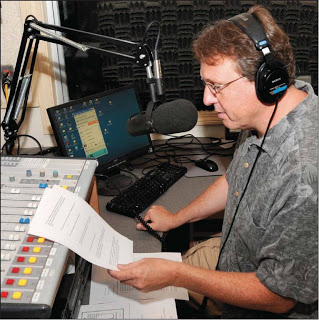
The host of the program is the Reverend John Shuck, a Presbyterian minister for 21 years and currently the minister at the First Presbyterian Church of Elizabethton, Tennessee. Prior to entering the ministry, Shuck was a radio broadcaster at stations in Boise, Idaho and Seattle, Washington. Shuck’s website is HERE and podcasts are available by heading over to PODOMATIC.
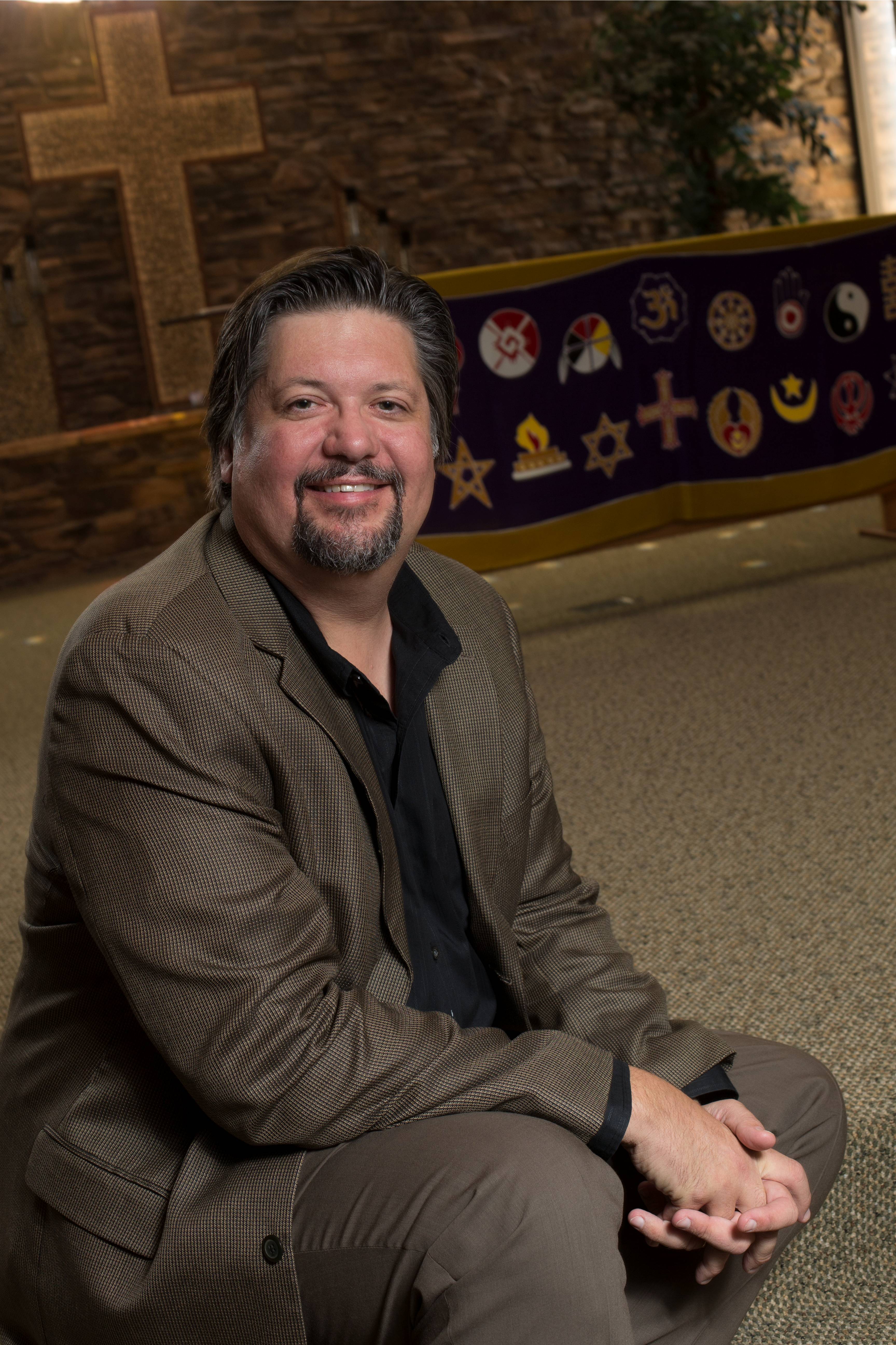
In Southern California at the end of July? Then join author, pastor, and co-creator of Living the Questions, Rev. David Felten on Monday, July 29th and Tuesday, July 30th at Pilgrim UCC in Carlsbad for practical insights on a Progressive approach to 21st century Christianity.
Ever struggled with questions about how Christianity is going to survive in an increasingly secular world – or whether it should survive? How do we justify the expense of maintaining brick and mortar churches when Jesus’ call to peace and justice are struggling to get any traction in our communities? For some surprising insights and practical tools to help tease out some possibilities, we’ll be spring-boarding off of four Biblical stories you thought you knew, but probably don’t!
“The time has come and is long-since past” to abandon “the idea that God is ‘in control’.” It is an idea “so troublesome as to be utterly useless. But to think of the Divine as that power called love, the one who “suffers with” and comforts the afflicted regardless of the outcome, has spiritual integrity born of real life experience.”
In Rabbi Harold S Kushner’s “book, The Lord is My Shepherd: Healing Wisdom of the Twenty-Third Psalm, the rabbi notes that ‘in times of trouble, God does not explain, God comforts.’ Through grace, suffering makes compassion possible, and what is more central to the life of faith than striving to be more compassionate?”
“Most people in church grew up listening to those who claimed to have all the answers. Who knew that the questions were more interesting, that ‘living’ them is true faithfulness. Felten and Procter-Murphy have given the class such superb resources that no one is in a hurry to graduate.”
— Dr. Robin R. Meyers, Senior Minister, Mayflower Congregational UCC Church; Professor of Rhetoric, Oklahoma City University
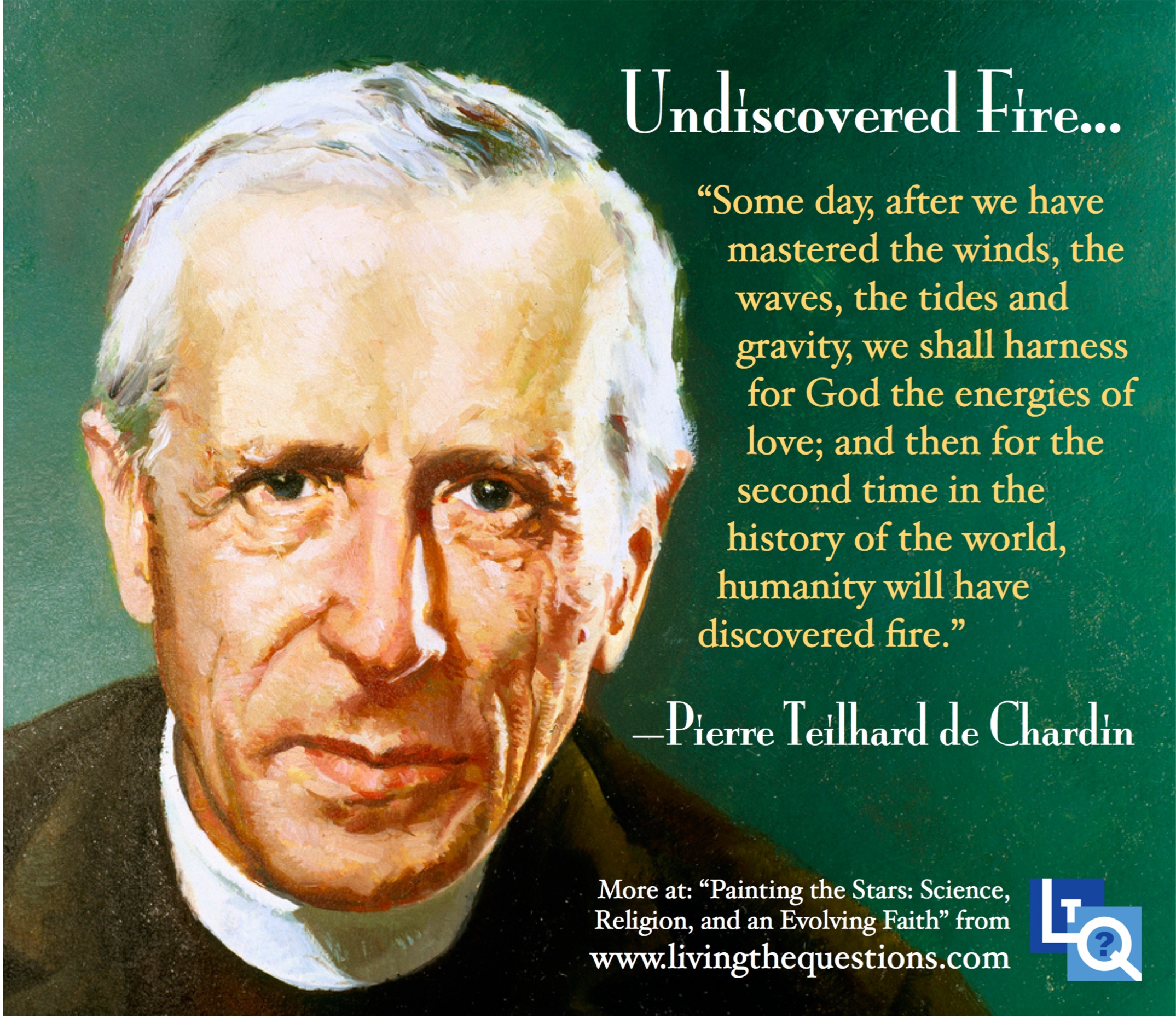
“Some day, after we have mastered the winds, the waves, the tides and gravity, we shall harness for God the energies of love; and then for the second time in the history of the world, humanity will have discovered fire.”
— Pierre Teilhard de Chardin
Painting the Stars is Living the Questions’ new series celebrating the communion of science and faith andexploring the promise of an evolutionary Christian spirituality. It features a dozen leading theologians and leaders in the area of evolutionary spirituality and a participant guide by author and evolutionary theologian, Bruce Sanguin. Watch for it in the summer of 2013! Find out more at Living the Questions.
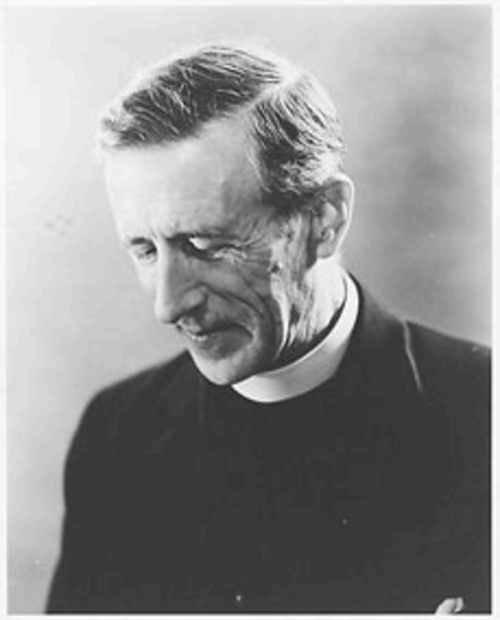
Pierre Teilhard de Chardin was a Jesuit priest and philosopher who trained as a paleontologist and geologist. Many of his ideas came into conflict with the Catholic Church, particularly regarding the doctrine of Original Sin, his views concerning the origin of humanity, and his teaching of evolutionary theory. To limit his influence, the French Jesuits sent him as far away as they could, which at the time was China. Little did they know that he would fall in with a group of scientists who were on the verge of an archaeological breakthrough: the discovery of Peking Man (which only enhanced Teilhard’s reputation). For his work and publications, he was reprimanded, his works were condemned by the Holy Office, and he remained in relative obscurity during his lifetime.
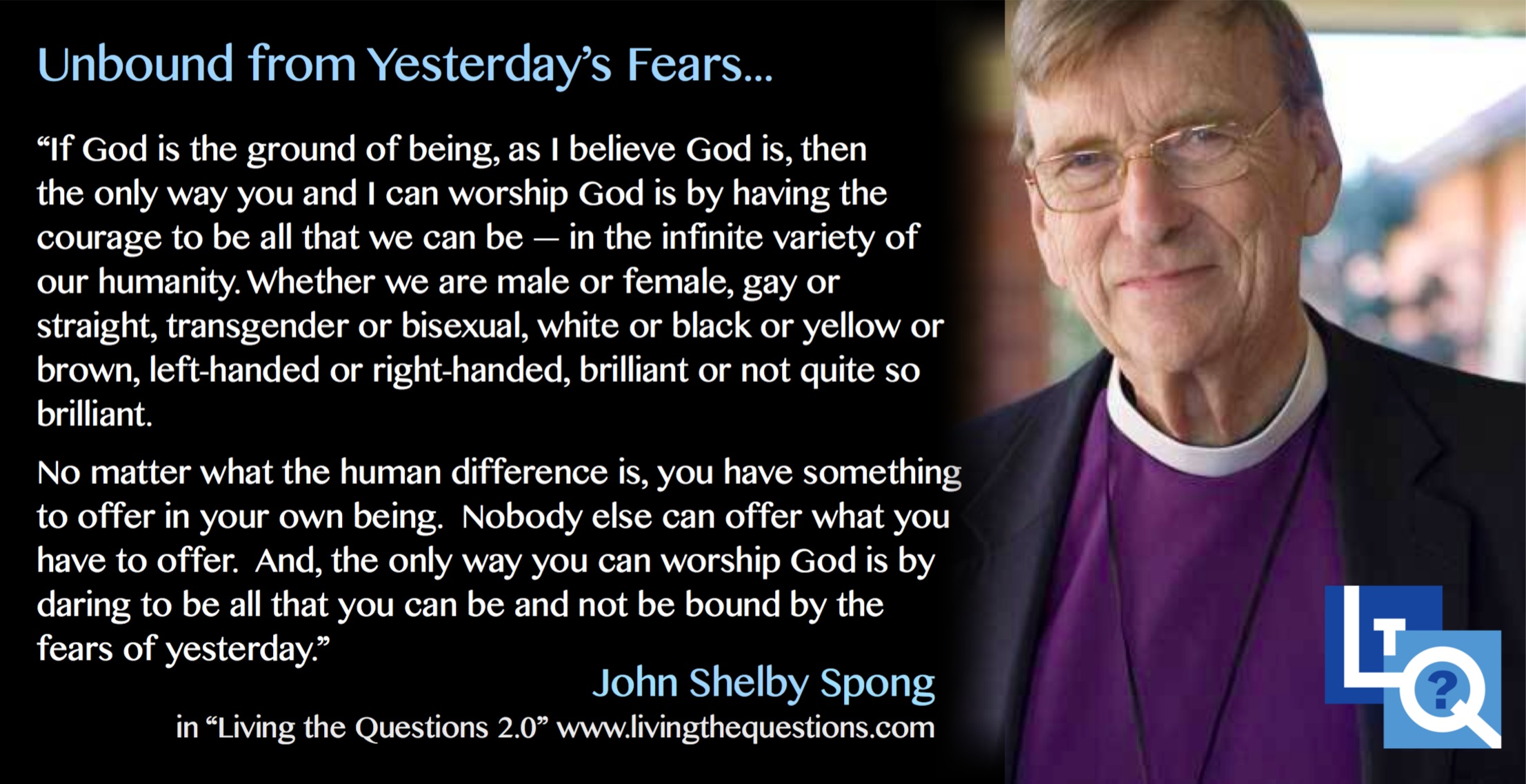
“If God is the ground of being, as I believe God is, then the only way you and I can worship God is by having the courage to be all that we can be — in the infinite variety of our humanity. Whether we are male or female, gay or straight, transgender or bisexual, white or black or yellow or brown, left-handed or right-handed, brilliant or not quite so brilliant.
No matter what the human difference is, you have something to offer in your own being. Nobody else can offer what you have to offer. And, the only way you can worship God is by daring to be all that you can be and not be bound by the fears of yesterday.”
The retired Bishop of Newark, New Jersey, John Shelby Spong is one of the featured contributors in several Living the Questions series. He is a columnist and author of over sixteen books including Rescuing the Bible from Fundamentalism and Why Christianity Must Change or Die. Lecturer at Harvard, Humanist of the Year, and a guest on numerous national television broadcasts including The Today Show, Politically Incorrect with Bill Maher, and Larry King Live, Bishop Spong continues to write and lecture around the world. His newest book is The Fourth Gospel: Tales of a Jewish Mystic.
Ever feel like Jesus has been kidnapped by the Christian Right and discarded by the Secular Left? Then you need Saving Jesus, a 12-session DVD-based exploration of a credible Jesus for the third millennium — now available for home use! This remarkable series features nearly 30 thought leaders at the forefront of Progressive Christianity, including Marcus Borg, Diana Butler Bass, John Dominic Crossan, Yvette Flunder, Matthew Fox, Amy-Jill Levine, Brian McLaren, Stephen Patterson, Helen Prejean, John Shelby Spong, & more!
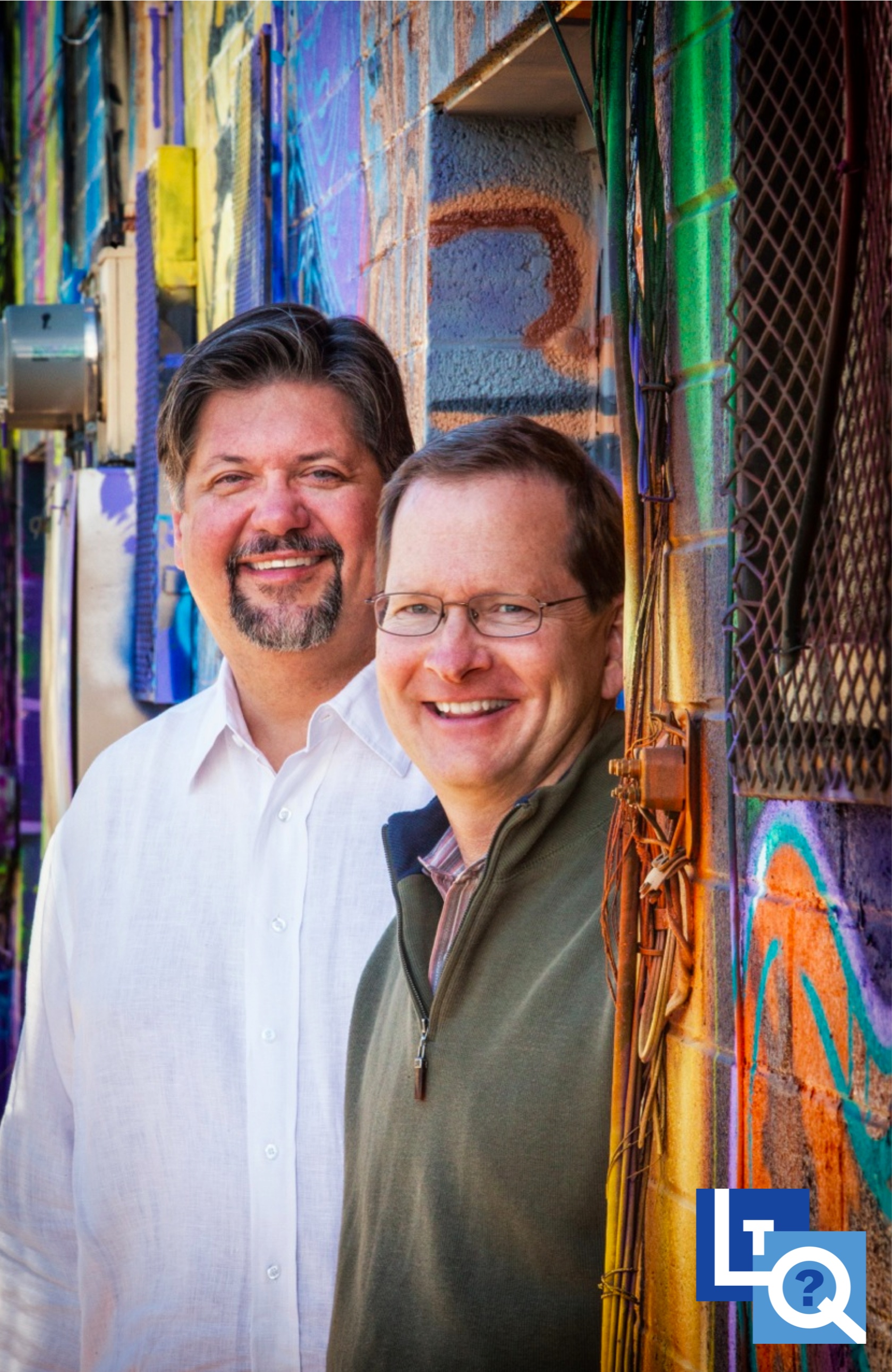
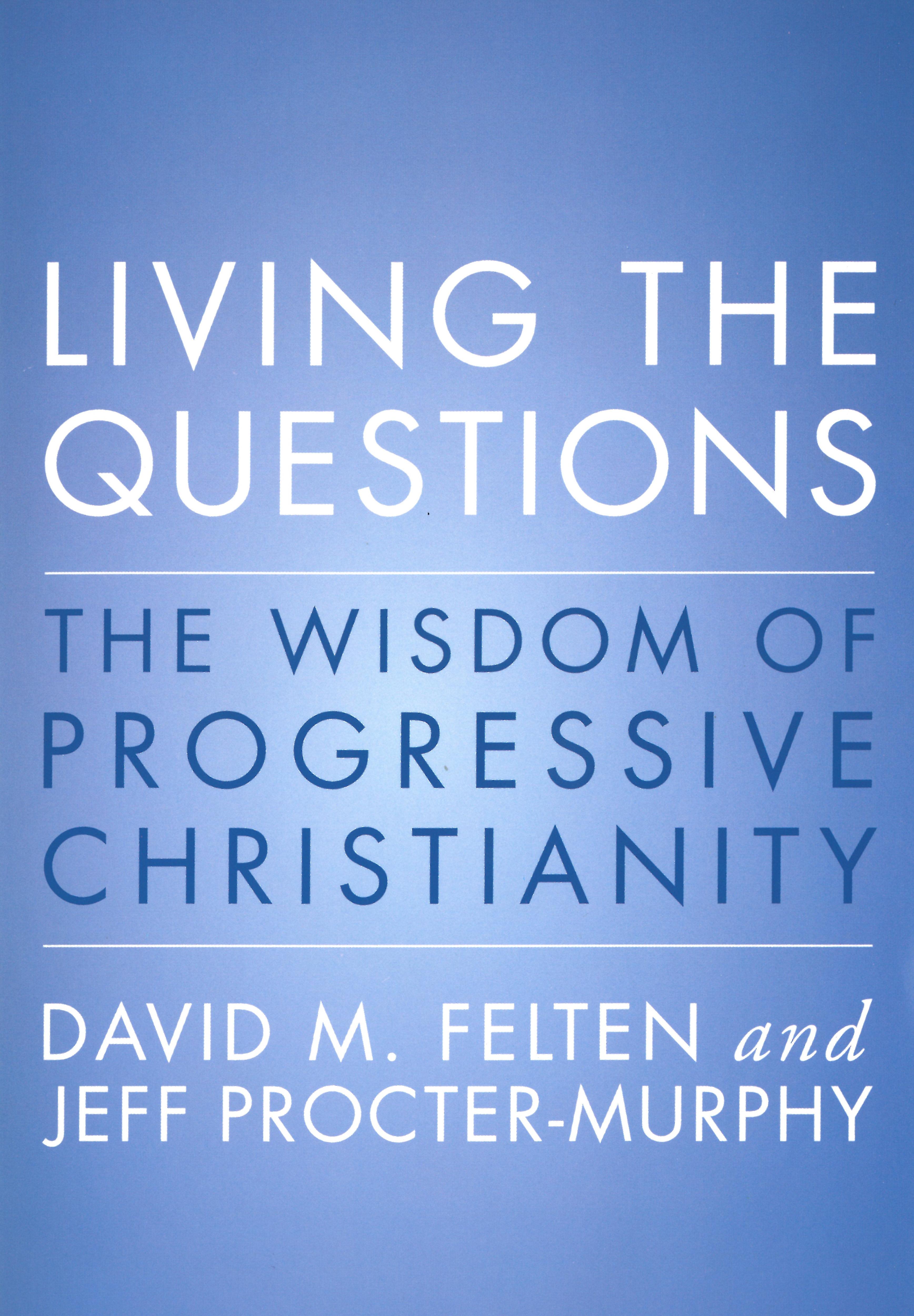
Pastors David Felten and Jeff Procter-Murphy, along with the voices of top Bible scholars and church leaders—including Marcus Borg, Diana Butler Bass, John Dominic Crossan, Helen Prejean, and John Shelby Spong—provide a primer to a church movement that encourages every Christian to “live the questions” instead of “forcing the answers.”
Based on the bestselling DVD course, "Living the Questions: The Wisdom of Progressive Christianity" tackles issues of faith, dogma, and controversial subjects that many churches are afraid to address. "Living the Questions" is the most comprehensive survey of progressive Christianity in existence today.
Available at www.livingthequestions.com, through online booksellers, and as a Kindle download!
“A welcome book that is bold (without being contentious) and courageous (without needing to be triumphant), Felten and Procter-Murphy give voice to a faith that provides a profound alternative to the dominant ideology of ‘American Christianity.’ Attention should be paid!”
— WALTER BRUEGGEMANN, PROFESSOR EMERITUS, COLUMBIA THEOLOGICAL SEMINARY









 Living the Questions
You must be logged in to post a comment.