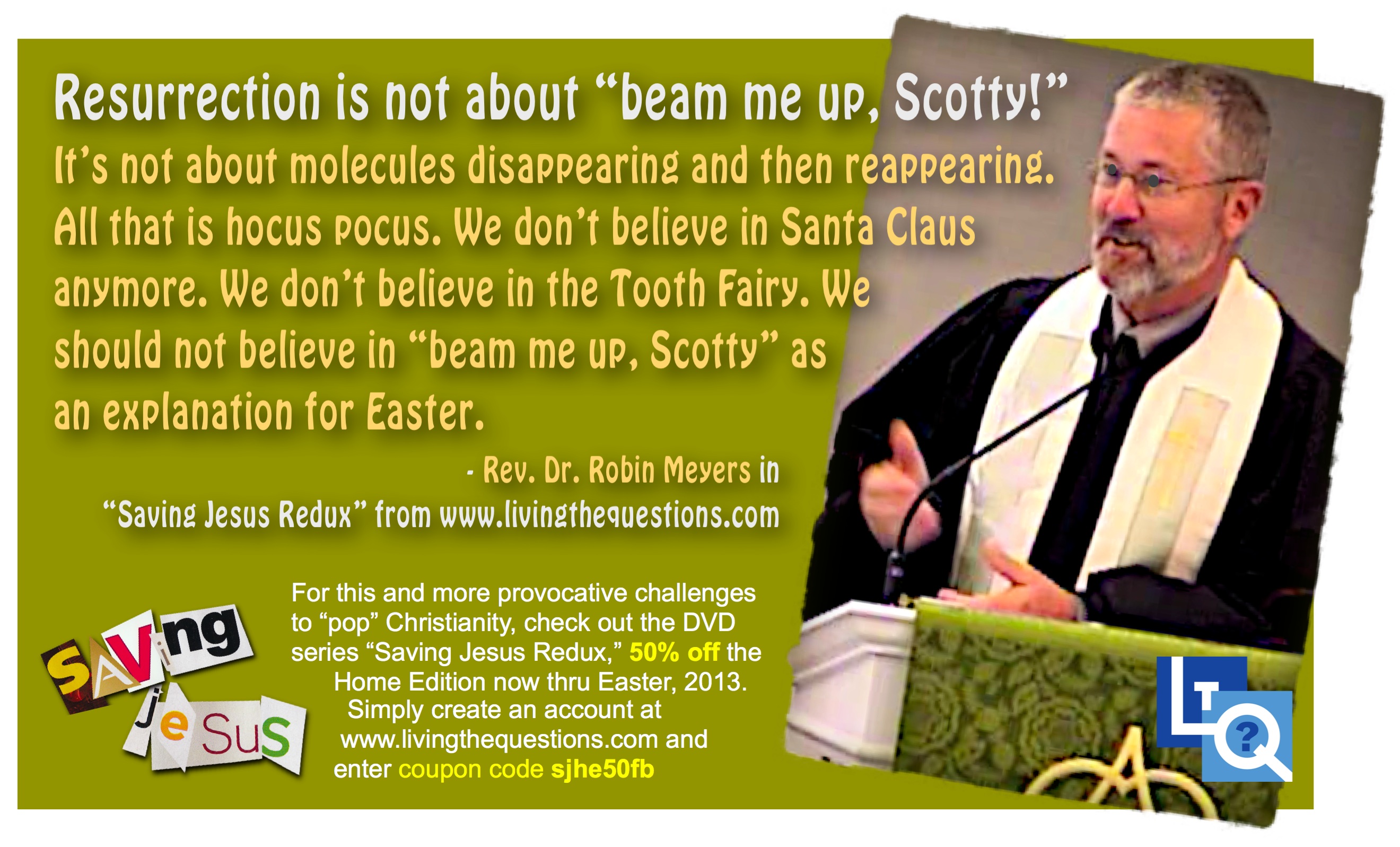
Robin Meyers believes that the resuscitation of Jesus’ body is less important than the idea of resurrection as a credible and meaningful principle for living:
“Resurrection is not about ‘beam me up, Scotty!’ It’s not about molecules disappearing and then reappearing. All that is hocus pocus. We don’t believe in Santa Claus anymore. We don’t believe in the Tooth Fairy. We should not believe in ‘beam me up, Scotty’ as an explanation for Easter.”
For this and more provocative challenges to “pop” Christianity, check out the DVD series “Saving Jesus Redux,” 50% off the Home Edition now thru Easter, 2013. Simply create an account at www.livingthequestions.com and enter coupon code sjhe50fb
Robin Meyers is a United Church of Christ pastor, Professor of Rhetoric, and author of “Why the Christian Right is Wrong,” “Saving Jesus from the Church,” and “The Underground Church.” You’ll find Robin in LtQ’s “Saving Jesus Redux,”“LtQ2,” and Living the Questions’ upcoming series on the origin and use of the Bible.
Not only is Original Sin NOT in the Bible, Elie Wiesel says that Original Sin is alien to Jewish thinking (and therefore alien to Jesus’ way of thinking). Let’s ditch the whole thing, shall we?
Matthew Fox says, “Jesus never heard of ‘Original Sin’.” The term wasn’t even used until the 4th century, so it’s “strange to run a church, a gathering, an ekklesia — supposedly on behalf of Jesus — when one of its main dogmatic tenets, Original Sin, never occurred to Jesus.” Sadly, Western Christianity is dependent on and chronically “attached to Original Sin — but what they’re really attached to is St. Augustine. The fact is that most Westerners believe more in Augustine (and his preoccupation with sex) than they do in Jesus.”
Matthew Fox is an author, educator, activist, and Episcopal priest. His books include Original Blessing, Creation Spirituality and The Coming of the Cosmic Christ. He appears in a number of Living the Questions DVD series including Living the Questions 2.0 and Saving Jesus Redux
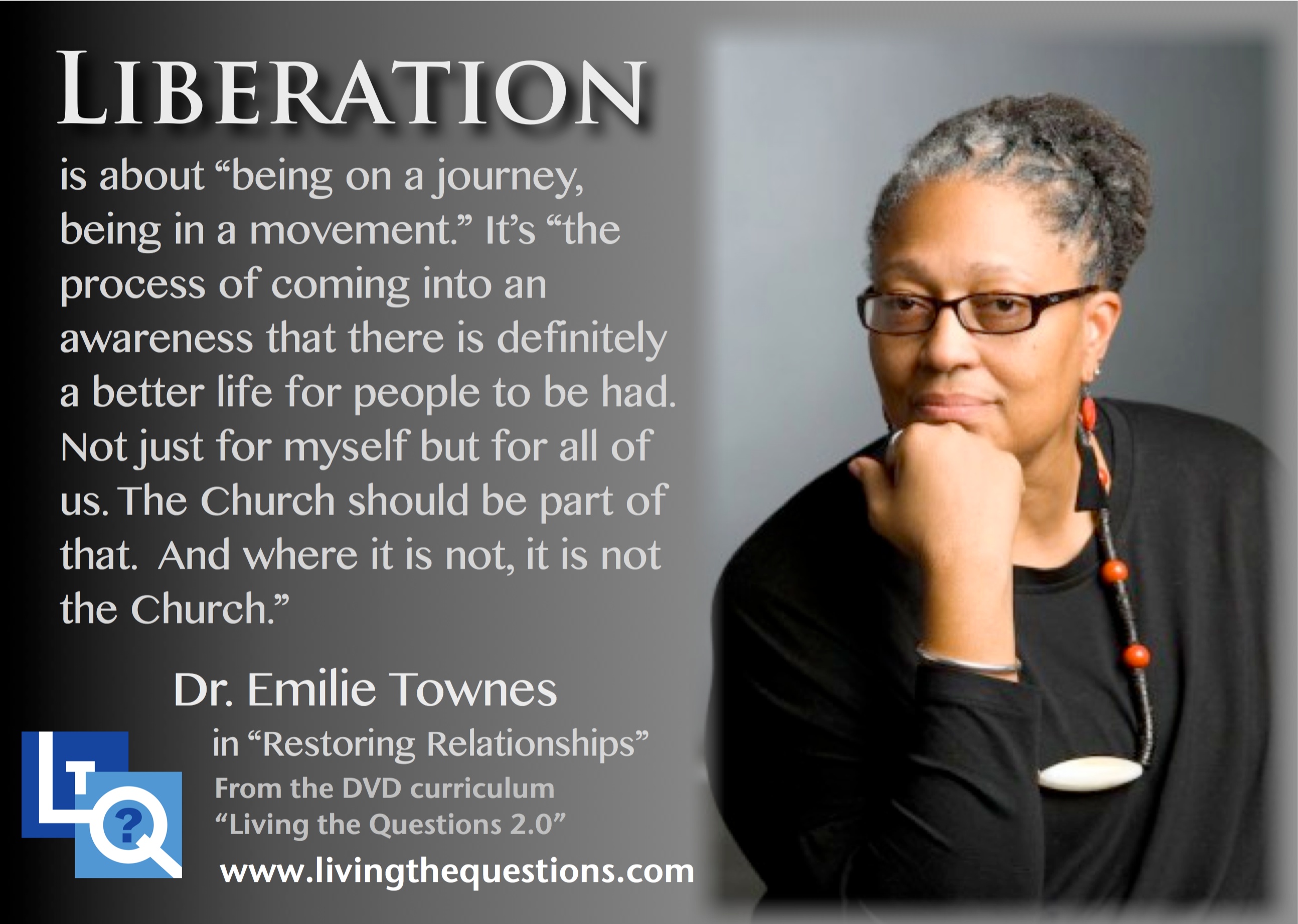
Liberation is about “being on a journey, being in a movement.” It’s “the process of coming into an awareness that there is definitely a better life for people to be had. Not just for myself but for all of us. The Church should be part of that. And where it is not, it is not the Church.”
And whether it’s the Church or each of us as individuals, it’s about “doing the right thing day after day after day and moment after moment. It really is doing it every day. I cannot say it often enough: treating people fairly, decently – respecting them for who they are – knowing that none of us is perfect.”
Rev. Dr. Emilie Townes is an an ordained American Baptist clergywoman and scholar whose areas of expertise include Christian ethics and womanist theology. She appears in a number of Living the Questions DVD programs. In 2013, Townes is moving from Yale University to become dean of Vanderbilt University Divinity School.
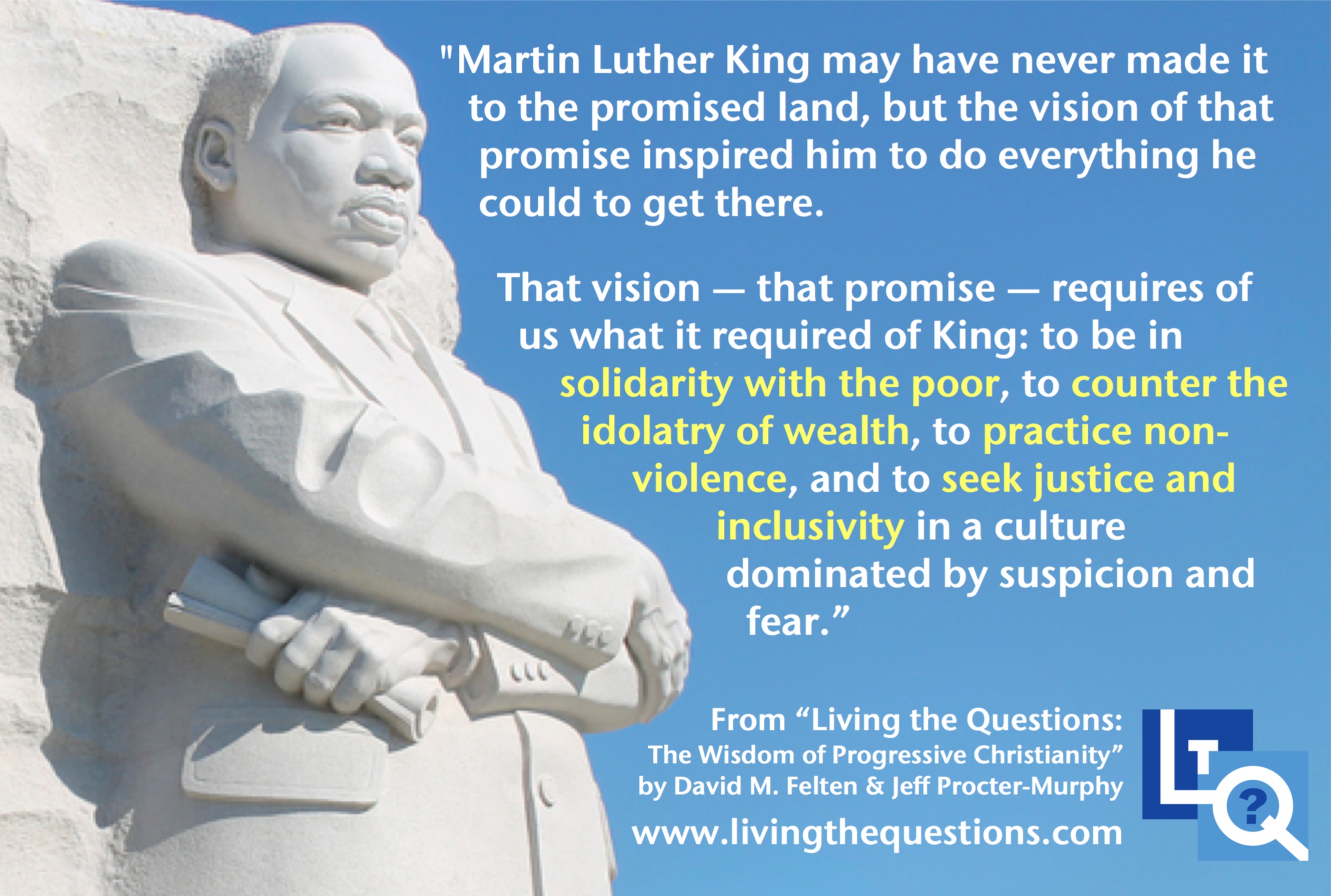
“Martin Luther King may have never made it to the promised land, but the vision of that promise inspired him to do everything he could to get there.
That vision — that promise — requires of us what it required of King: to be in solidarity with the poor, to counter the idolatry of wealth, to practice non-violence, and to seek justice and inclusivity in a culture dominated by suspicion and fear.”
From “Living the Questions:
The Wisdom of Progressive Christianity”
by David M. Felten & Jeff Procter-Murphy
“Felten and Procter-Murphy give voice to a faith that provides a profound alternative to the dominant ideology of ‘American Christianity.’ Attention should be paid!” – Walter Brueggemann, professor emeritus, Columbia Theological Seminary
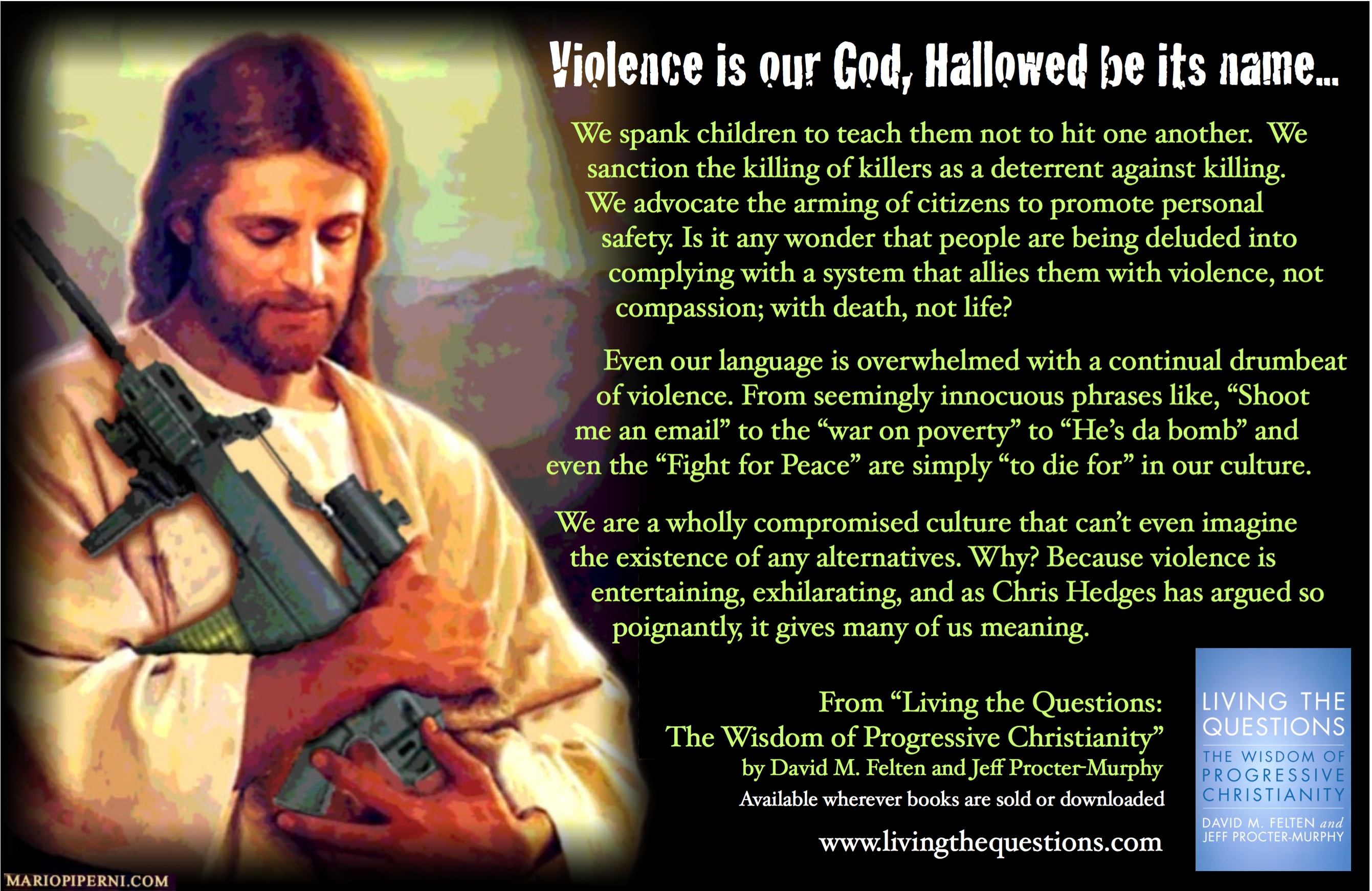
We spank children to teach them not to hit one another. We sanction the killing of killers as a deterrent against killing. We advocate the arming of citizens to promote personal safety. Is it any wonder that people are being deluded into complying with a system that allies them with violence, not compassion; with death, not life?
Even our language is overwhelmed with a continual drumbeat of violence. From seemingly innocuous phrases like, “Shoot me an email” to the “war on poverty” to “He’s da bomb” and even the “Fight for Peace” are simply “to die for” in our culture.
We are a wholly compromised culture that can’t even imagine the existence of any alternatives. Why? Because violence is entertaining, exhilarating, and as Chris Hedges has argued so poignantly, it gives many of us meaning.
From “The Myth of Redemptive Violence” in
Living the Questions: The Wisdom of Progressive Christianity
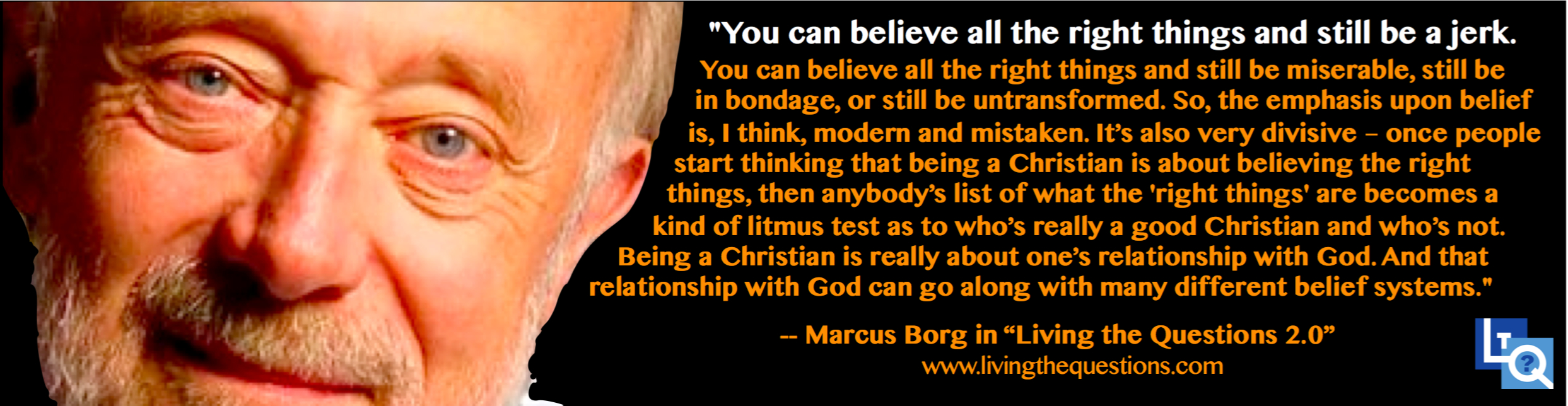
“You can believe all the right things and still be a jerk. You can believe all the right things and still be miserable, still be in bondage, or still be untransformed. So, the emphasis upon belief is, I think, modern and mistaken. It’s also very divisive – once people start thinking that being a Christian is about believing the right things, then anybody’s list of what the ‘right things’ are becomes a kind of litmus test as to who’s really a good Christian and who’s not. Being a Christian is really about one’s relationship with God. And that relationship with God can go along with many different belief systems.”
Marcus Borg in “Living the Questions”
– Marcus Borg in “Living the Questions 2.0”
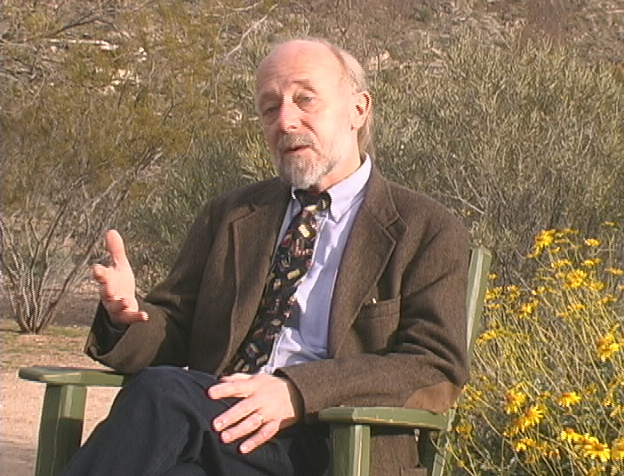
Marcus Borg is a world-renowned Jesus scholar, speaker, and author of numerous books, including “Meeting Jesus Again for the First Time” & “The Heart of Christianity.” He is also a contributor to a number of Living the Questions DVD programs, including “Eclipsing Empire” and “First Light.”
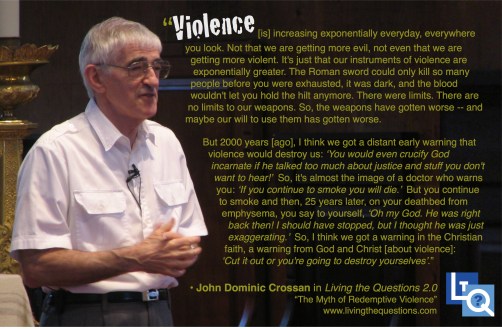
In the aftermath of the Sandy Hook massacre, the loudest voices seem to be focusing on curbing the availability of certain weapons and preventing unstable individuals from acquiring weapons. But Dom Crossan believes that “The most important question we have to face today really is violence.” Recalling John’s version of Jesus’ trial before Pilate, Crossan points out the way it is commonly misinterpreted: “Jesus himself says to Pilate, ‘My kingdom is not of this world.’ And if he had stopped there, [Pilate] would have said, ‘Well, he means it’s up in heaven.’ No, [Jesus] says, ‘If my kingdom was of this world, [my] guys would be in here to liberate me.’ In other words, ‘We’d use force and violence, just like you people did.’ So a kingdom not of this world is not a kingdom ‘in heaven.’ It is a kingdom here below which does not use force or violence.”
John Dominic Crossan is one of the world’s most respected Jesus scholars and author of numerous books, including “Jesus, a Revolutionary Biography” & “God and Empire: Jesus Against Rome, Then and Now.” He is featured in a number of Living the Questions programs, including “First Light” and “Eclipsing Empire.” In 2012, Crossan served as the President of the Society of Biblical Literature (SBL)
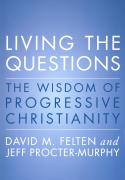
Thanks to you and who-knows-how-many other fans of LtQ, Living the Questions: The Wisdom of Progressive Christianity hit #1 on Amazon’s Theology Bestseller List on December 12, 2012! Thank you!!
It’s a “Thank You” Sale!!
50% off ALL LtQ Home Edition DVDs now through Christmas!
With Pope Benedict’s recent release of a book reflecting on the Nativity, the historicity of the Virgin Birth is yet again back in the news. It seems that Benedict is more concerned that barnyard animals are inaccurately included in most traditional Nativity scenes than the fact that insistence on a literal virgin birth is one of the reasons many thinking people leave the church.
Retired Episcopal Bishop Jack Spong sees it differently than Pope Benedict — and offers an alternative vision for interpreting the meaning behind the parable of the virgin birth. With apologies to Dr. Seuss: “Maybe Christmas, Jack thought, doesn’t come from a virgin. Maybe Christmas, perhaps, means a Spirit emergin’…”.
Pastors David Felten and Jeff Procter-Murphy, along with the voices of top Bible scholars and church leaders—including Marcus Borg, Diana Butler Bass, John Dominic Crossan, Helen Prejean, and John Shelby Spong—provide a primer to a church movement that encourages every Christian to “live the questions” instead of “forcing the answers.”
Based on the bestselling DVD course, "Living the Questions: The Wisdom of Progressive Christianity" tackles issues of faith, dogma, and controversial subjects that many churches are afraid to address. "Living the Questions" is the most comprehensive survey of progressive Christianity in existence today.
Available at www.livingthequestions.com, through online booksellers, and as a Kindle download!
“A welcome book that is bold (without being contentious) and courageous (without needing to be triumphant), Felten and Procter-Murphy give voice to a faith that provides a profound alternative to the dominant ideology of ‘American Christianity.’ Attention should be paid!”
— WALTER BRUEGGEMANN, PROFESSOR EMERITUS, COLUMBIA THEOLOGICAL SEMINARY

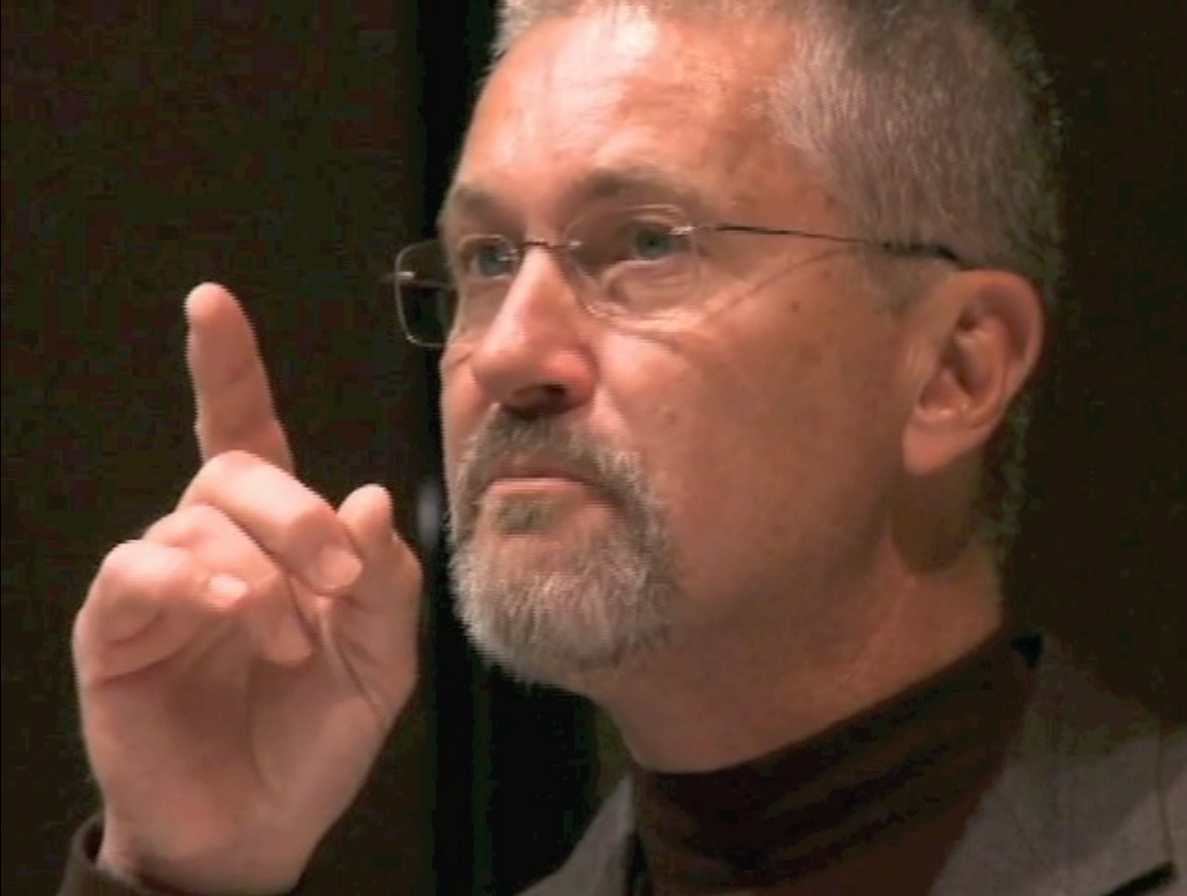

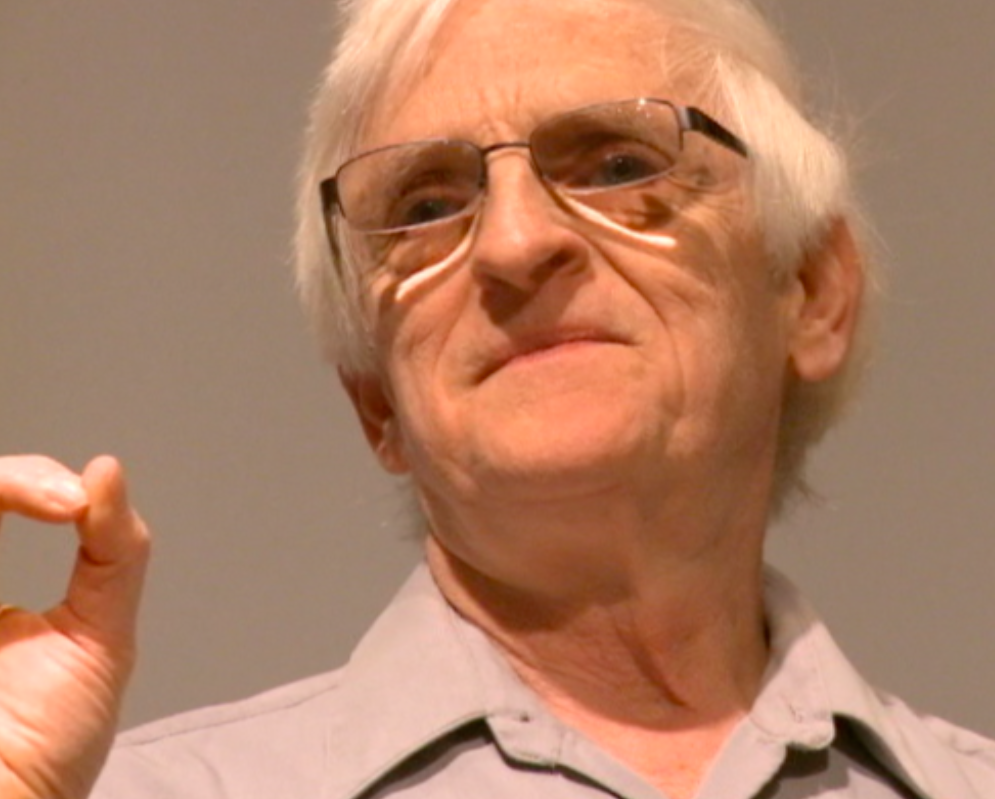

 John Dominic Crossan is one of the world’s most respected Jesus scholars and author of numerous books, including “Jesus, a Revolutionary Biography” & “God and Empire: Jesus Against Rome, Then and Now.” He is featured in a number of


 Living the Questions
You must be logged in to post a comment.