With Pope Benedict’s recent release of a book reflecting on the Nativity, the historicity of the Virgin Birth is yet again back in the news. It seems that Benedict is more concerned that barnyard animals are inaccurately included in most traditional Nativity scenes than the fact that insistence on a literal virgin birth is one of the reasons many thinking people leave the church.
Retired Episcopal Bishop Jack Spong sees it differently than Pope Benedict — and offers an alternative vision for interpreting the meaning behind the parable of the virgin birth. With apologies to Dr. Seuss: “Maybe Christmas, Jack thought, doesn’t come from a virgin. Maybe Christmas, perhaps, means a Spirit emergin’…”.
Are you a fan, groupie, or friend of LtQ? Then here’s your chance to help spread the word about Living the Questions and Progressive Christianity! David and Jeff’s new book, “Living the Questions: The Wisdom of Progressive Christianity” is available wherever books are sold or downloaded – BUT, if we all band together and buy a copy on ONE DAY, there’s a good chance that we’ll make it into the “Bestseller” category!
So c’mon – you know you were going to buy a copy anyway. Be sure to go to Amazon.com and buy one (or twelve!) on
December 12th 2012 (that’s 12.12.12!).
Score the perfect Christmas gift for that hard-to-buy-for friend or relative! Buy a copy for the person you’ve been arguing theology with for years! Or just buy a copy!
HANG ON! DON’T ORDER TODAY – WAIT UNTIL 12/12
Everyone ordering on ONE DAY is the key!
Thank you in advance for helping David and Jeff out in this hair-brained scheme to conquer the heights of Amazon Bestsellerdom.
–and we’d greatly appreciate your help spreading the word. Many thanks!
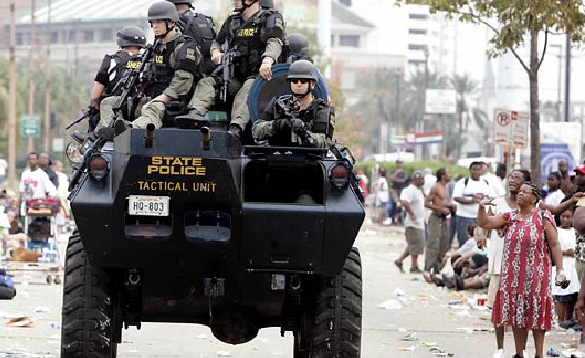
Tragic as the downfall of CIA Director General David Petraeus might be, it’s just the symptom of a much larger problem: the “spirit of militarism.” The high rates of military divorces, suicides, and PTSD diagnoses seem to suggest that what we have asked our military to do over the last ten years has put severe strain on rank and file soldiers and their families.
The paramilitary SWAT team of the Louisiana State Police patrols post-Katrina New Orleans.
Whether or not the cracking up of the personal lives of soldiers and generals creates a practical national security challenge remains to be seen. But what is not in doubt is the spiritual question that is raised not only when the military solution seems to be perceived as the most effective choice for countries around the world, but when our whole culture becomes militarized — from our police forces to our childrens’ video games to our economy’s enslavement to the military-industrial complex.
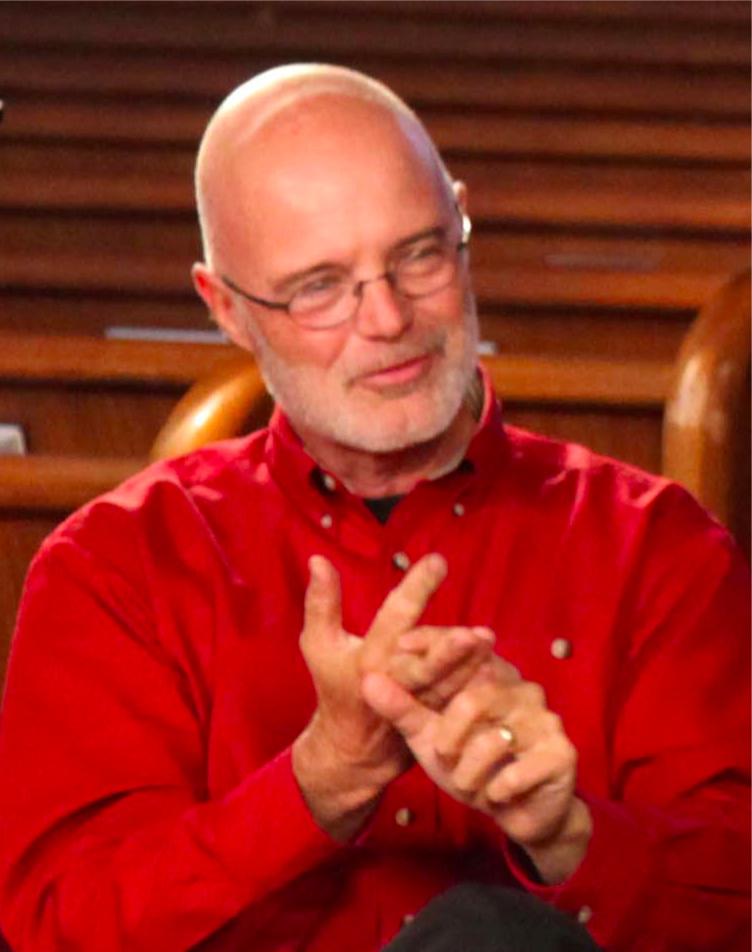
Brian McLaren shares an incident from Jesus’ life that suggests that the “spirit of militarism” itself is the problem:
“I think of an encounter Jesus has with this fellow and he says, “What’s your name?” He calls out from him the name of what’s disturbing him. And the name he gives would be like today somebody saying, “Platoon” — because he uses a military word: Legion. So, what’s driving you crazy? What’s making you insane? “Platoon.” And so it’s this language of living in this world that’s so militarized. “This is what’s making me crazy.” And so that man is now restored to humanity from being oppressed by something inside of him, the spirit of militarism you might say.”
Jesus managed to cast out the demon that possessed the man (see Mark 5 and Luke 8). But today, the “spirit of militarism” seems all the more entrenched — and poised to not only define, but cripple our culture and our legacy.
_________________________
Brian McLaren is a pastor, emergent church leader, activist, and speaker and has been named one of the most influential Christian leaders in America. He is the author of numerous books, including Everything Must Change, A New Kind of Christianity, Naked Spirituality, and Why Did Jesus, Moses, the Buddha, and Mohammed Cross the Road? Christian Identity in a Multi-Faith World.
The McLaren quote is an excerpt from the “Living the Questions” program, “Saving Jesus,” just one of many programs designed to spark conversation in questioning the dominant pop theology of Christian orthodoxy.
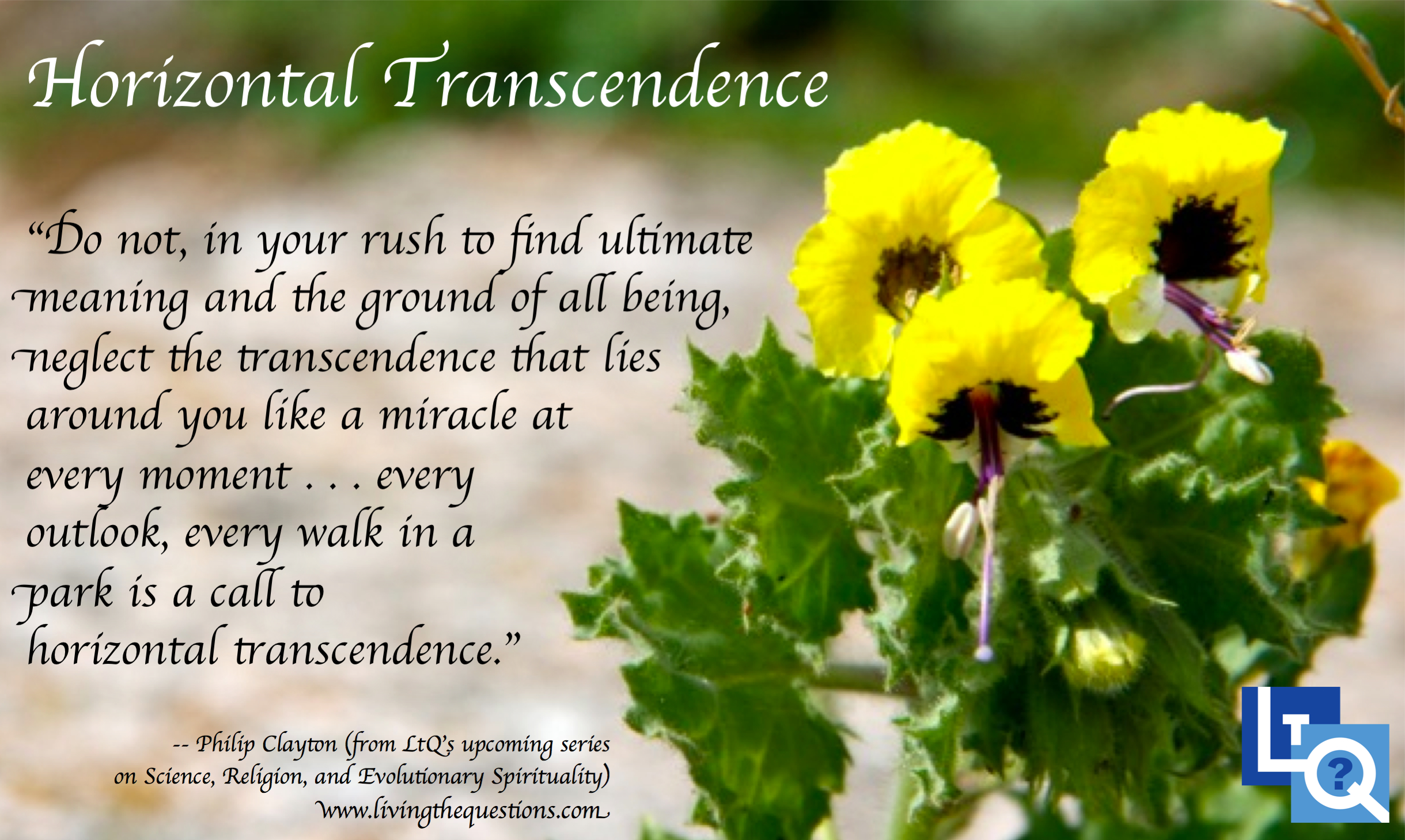
In a reflection reminiscent of Emerson’s appeal to see in every fair flower a “wayside sacrament,” Philip Clayton urges the seeker to not miss the miracle of every moment:
“Do not, in your rush to find ultimate meaning and the ground of all being, neglect the transcendence that lies around you like a miracle at every moment . . . every outlook, every walk in a park is a call to horizontal transcendence.”
— Philip Clayton (from LtQ’s upcoming series on Science, Religion, and Evolutionary Spirituality)
Philip Clayton is the author of numerous books, including, Adventures in the Spirit: God, World, Divine Action (Fortress Press, 2008), In Quest of Freedom (Vandenhoeck & Ruprecht 2009), The Predicament of Belief (Oxford 2012, with Steven Knapp), and Religion and Science: The Basics (Routledge 2012). He has served as the Vice President for Academic Affairs, Dean of Faculty, and Professor of Theology at Claremont School of Theology and is currently the Provost of Claremont Lincoln University.
There are four “canonical” gospels in the Bible. While Matthew and Luke are the only gospels to tell the story of Jesus’ birth, their stories are very different from one another.
Our play opens as Matt & Lucy volunteer to help with this year’s Christmas pageant. Little do they know that the Director will give them each a different script and leave them to work out how to put on a play with conflicting story lines, characters, and settings.
As the play ends, the Director explains how having two stories gives us an appreciation of the diversity of ways early Christians expressed their understanding of who Jesus was.
Program
Matt & Lucy’s Version Births can be as simple or elaborate as you decide. There are four speaking parts for youth and seven delightfully singable songs for young children (aged 3 and up). The LtQ Equip-kit includes two CDs: a TRAX music CD containing separate instrumental and vocal tracks of the seven musical selections, and a CD-ROM with printable pdf files of the script, production notes and lead sheets (arrangements) of the songs.
“This is a fabulous script. We adapted it by dividing up Matt and Lucy’s lines between about 6 other theater staff to create more speaking roles. It was convenient that the theater people could rehearse separately from the choir. We had choir members play the character roles. The theology was outstanding, and meaningful to the kids as well as the adult audience. The rhythm of songs and spoken lines kept it all interesting. Our audience clapped after each song, which gave us lots of time for transitions. This script format is really a masterwork, and we look forward to more productions like this. Thank you very, very, much.”
Sue Ellen Braunlin at First Congregational UCC, Indianapolis
“Dear LTQ, We did Matt and Lucy’s Version Births yesterday at church. Parents and my senior minister agree that it was the best program the church has ever produced. The script was clever, the kids loved the songs, it was very easy to put together, and the parents were proud as could be. Thanks for making our holiday program great!”
Dan Rodriguez Schlorff, Director of Religious Education, Bradford Community Church Unitarian Universalist
Kenosha, WI
“We absolutely loved this program. Traditionally the Church School would hold a “Christmas pageant” after lunch on the Sunday before Christmas, followed by an all-church party. We decided what “Matt and Lucy’s Version Births” had to say was too important for anyone to miss: our children took over the sermon slot so that everyone could hear. We have a tiny, but enthusiastic, Church School – in fact we used the large puppets the young people had created for telling other stories in church, as the holy family, to help us out when one family of several children could not attend at the last minute. The songs are catchy and fun. The backing music is provided. It does not take memorization so much as stage directions, and those are not complicated. The message fits our preaching and it opened doors to encourage people, once again, to our Living the Questions stable studies. Thank you!”
Janet Douglass, Assistant Pastor, Christ Church, United Methodist, Troy, NY
Does Scripture have relevance for the 21st Century? Are there lessons in the parables that speak to us about loving our enemies or even labor relations? Amy-Jill Levine says yes. What do you say?
Dr. Levine is University Professor of New Testament and Jewish Studies, E. Rhodes and Leona B. Carpenter Professor of New Testament Studies, and Professor of Jewish Studies at Vanderbilt University Divinity School and College of Arts and Sciences.
Her Vanderbilt bio calls Dr. Levine “a self-described ‘Yankee Jewish feminist who teaches in a predominantly Christian divinity school in the buckle of the Bible Belt.'”
“LtQ Clips” offer thought-provoking observations and comments on spirituality and religion from prominent authors, scholars, and thinkers. These excerpts from“Living the Questions” curriculum are designed to spark conversation in questioning the dominant pop theology of American Christianity.
There are plenty of different Bibles to choose from. Roman Catholics, Orthodox Christians and Protestants all use different versions of Scripture. But did you know that some Bibles come with more than just differences in translation? As Timothy Beal points out, some Bibles come with “values added” that weren’t in the original text that change the meaning of the Bible. Check out the work of the Conservative Bible Project for an example of this.
“LtQ Clips” offer thought-provoking observations and comments on spirituality and religion from prominent authors, scholars, and thinkers. These excerpts from“Living the Questions” curriculum are designed to spark conversation in questioning the dominant pop theology of American Christianity.
Mosques in America are being set on fire. Sikhs, mistaken for Muslims, are cut down in their own Temple. Muslim graves desecrated in Chicago. Violence against Muslim-Americans is getting worse and religious leaders remain silent — especially on 9/11. Aysha Hidayatullah says, “One wonders how Muslims could actually flourish and come into their own if they weren’t constantly worried about the scrutiny of people who seem to be watching for any sign that confirms the dominant narrative about Muslims being violent, un-assimilable foreigners.”
Ever since 1660, when Mary Dyer was executed by the Puritans for being a Quaker, the persecution of religious minorities has quietly been tolerated in America. Never mind the irony that the Puritans came to America to escape religious persecution. Evidently, the American ideal of religious freedom only applies if you’re a Christian.
Dr. Aysha Hidayatullah is Assistant Professor of Islamic Studies in the Department of Theology & Religious Studies at the Jesuit University of San Francisco
She teaches undergraduate courses on Islam, gender, race, and ethics. Her research interests include Muslim feminist theology; modern and contemporary exegesis of the Qur’an; representations of women in early Islamic history; Islamic sexual ethics; constructions of femininity and masculinity in various aspects of the Islamic tradition; feminist methodologies in the study of Islam; and the pedagogy of Islamic studies.
“LtQ Clips” offer thought-provoking observations and comments on spirituality and religion from prominent authors, scholars, and thinkers. These excerpts from “Living the Questions” curriculum are designed to spark conversation in questioning the dominant pop theology of American Christianity.
This week the second of the two major political parties in the United States is gathering to hold their annual convention to nominate a candidate for the presidency. At both conventions one of the topics under discussion is the role religion plays in our life and our politics. Should the Bible inform U.S. lawn?
That’s the question Pamela Eisenbaum asks in this video from Living the Questions. Dr. Eisenbaum is Associate Professor of Biblical Studies and Christian Origins at Iliff School of Theology. One of four Jewish New Testament scholars teaching in Christian theological schools, she is pioneering a new Jewish look at Paul. Her latest book is “Paul Was Not a Christian.”
“LtQ Clips” offer thought-provoking observations and comments on spirituality and religion from prominent authors, scholars, and thinkers. These excerpts from “Living the Questions” curriculum are designed to spark conversation in questioning the dominant pop theology of Christian orthodoxy.
Robin Meyers says, “We’ve projected upon the Bible something it was never intended to do: which is to give us answers to every conceivable human problem.” We keep going to scripture for answers to the Abortion dilemma, and it’s simply not there. “We don’t let the Bible speak on its own terms.” Instead, we engage in tortured exegesis to make it prove what we already believe to be the case.
As long as we place our ultimate authority in the Bible, we’ve got “the object of our worship in the wrong place.”
Robin Meyers is a United Church of Christ pastor, Professor of Rhetoric, and author of “Why the Christian Right is Wrong” & “Saving Jesus from the Church.” You’ll find Robin in LtQ’s “Saving Jesus Redux,”“LtQ2,” and Living the Questions’ upcoming series on the origin and use of the Bible.
“LtQ Clips” offer thought-provoking observations and comments on spirituality and religion from prominent authors, scholars, and thinkers. These excerpts from “Living the Questions” curriculum are designed to spark conversation in questioning the dominant pop theology of Christian orthodoxy.
Pastors David Felten and Jeff Procter-Murphy, along with the voices of top Bible scholars and church leaders—including Marcus Borg, Diana Butler Bass, John Dominic Crossan, Helen Prejean, and John Shelby Spong—provide a primer to a church movement that encourages every Christian to “live the questions” instead of “forcing the answers.”
Based on the bestselling DVD course, "Living the Questions: The Wisdom of Progressive Christianity" tackles issues of faith, dogma, and controversial subjects that many churches are afraid to address. "Living the Questions" is the most comprehensive survey of progressive Christianity in existence today.
Available at www.livingthequestions.com, through online booksellers, and as a Kindle download!
“A welcome book that is bold (without being contentious) and courageous (without needing to be triumphant), Felten and Procter-Murphy give voice to a faith that provides a profound alternative to the dominant ideology of ‘American Christianity.’ Attention should be paid!”
— WALTER BRUEGGEMANN, PROFESSOR EMERITUS, COLUMBIA THEOLOGICAL SEMINARY






 Living the Questions
You must be logged in to post a comment.