Montgomery, Alabama. 1965. 100,000 people demonstrating for voting rights. Tex Sample was there.
Finally the time came for Dr. King’s speech. I still regard that speech in Montgomery as the equal of the one that he had made in Washington in 1963. And when Dr. King enters into the last part of that speech, he began a kind of a call and response with himself, initially. He shouts out: “How long?” and he responds to himself, “Not long! How long? Not long! How long? Not long because no lie can live forever! How long? Not long! Because while the arc of the moral universe is long, it bends toward justice!” “How long?! Not long!” “How long?! Not long!” And then he shouted at us, “How long?” and those thousands of people got up off the ground and on their feet and shouted back, “NOT LONG!!!!”
Although the day culminated in Dr. King’s inspiring speech, there were other profound experiences of grace along the way…
________________________________________________
Former Academic Dean and Emeritus Professor of Church and Society at the Saint Paul School of Theology, Sample is a freelance lecturer, workshop leader, consultant, and storyteller. His books include Ministry in an Oral Culture: Living with Will Rogers, Uncle Remus, and Minnie Pearl, and co-editor of The Loyal Opposition: Struggling with the Church on Homosexuality. He is currently the coordinator of the Network for the Study of U.S. Lifestyles.
Excerpted from Living the Questions 2.0,
Episode 16: Social Justice:
“Realizing God’s Vision”
(Available as both a Small Group study and in a Home Edition for personal use at www.livingthequestions.com)
In this excerpt from the original Living the Questions program, Heather Murray Elkins shares a poignant story about the mystery and meaning of Christian baptism.
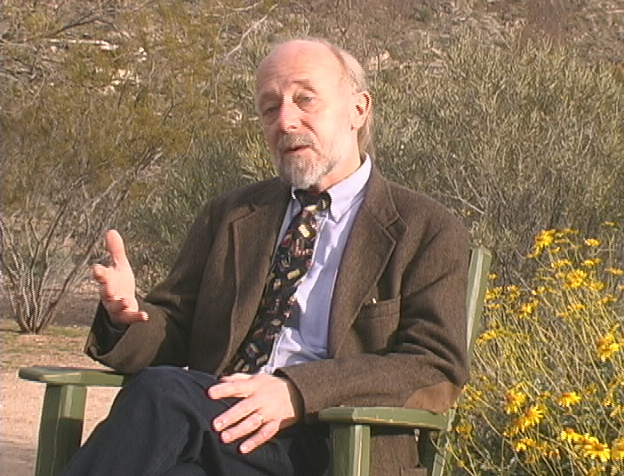
The Rev. Dr. Heather Murray Elkins, teacher, author, and truck-stop chaplain, is Professor of Worship, Preaching, and the Arts at Drew Theological School.
Excerpted from LtQ’s new “Saving Jesus Redux,” the words of Robert Raines are given voice in this prayer for the New Year. May your discontent lead to change and transformation in 2011!
O God,
make me discontented with things the way they are in the world,
and in my own life.
Make me notice the stains when people get spilled on.
Make me care about the slum child downtown, the misfit at work,
the people crammed into the mental hospital,
the men, women and youth behind bars.
Jar my complacency, expose my excuses,
get me involved in the life of my city and world.
Give me integrity once more, O God,
as we seek to be changed and transformed,
with a new understanding and awareness of our common humanity.
It’s that time of year again. Shoppers are rushing home with their treasures — all to honor the birth of a 1st century Jewish peasant. If most folks even think about anything beyond the gifts and carols, the conventional wisdom is that we’re celebrating the occurrence of actual historical events some 2000 years ago — wisdom based on an assumption that the gospels are history.
But even a cursory reading of Matthew and Luke reveal conflicting story lines, characters, and theological agendas that show that they couldn’t possibly BOTH be historically accurate. But that’s OK. Neither one was ever intended to be history, but symbolism. The problem comes when well-meaning believers try to make them into something they were never intended to be.
In Living the Questions 2.0, Marcus Borg makes a case for moving from the magical thinking of pre-critical naiveté through critical thinking to a post-critical naiveté that can still appreciate the Christmas stories for their deeper theological meanings, not their supposed historical accuracy.
“I don’t think the truth of the Christmas stories is dependant upon whether Jesus was born in Nazareth or Bethlehem, whether there were wise men, whether there really was a star. I think the truth of the stories is in their ancient archetypal religious symbolism, those affirmations that Jesus is the light and the darkness, and so forth.
“To hear these stories is using some of the most ancient archetypal language with one of their central affirmations being, Jesus is the light of the world, the true light that enlightens every person, with even them coming into the world. That’s the star, the radiant glory of God, and the angels in the night sky. It is the ability to hear the birth stories as true stories even though you know the star is not an astronomical object of history but probably the exegetical creation of Matthew as he interprets the sixtieth chapter of Isaiah as a literary creation. Even as you know that Jesus was probably born in Nazareth and not in Bethlehem. And even as you know that Herod the Great never ordered the slaying of all male babies in Bethlehem under age two, but rather that is the use of the story of the birth of Moses in the time of Pharaoh when Pharaoh issued a similar order and the author of Matthew is saying the story of Jesus is about the story of the true king coming into the world who the evil kings seeks to swallow up. This is the story of the exodus all over again. This is the story of the conflict between the Lordship of God known in Christ and the Lordship of Pharaoh and the rulers of this world and the rulers of this world always try to swallow up the one who is of God. Is that true? Post-critical naiveté is the ability to hear that as a true story.”
The birth narratives in Matthew and Luke are unlikely to portray much of anything that is “true” historically, but remain beautiful examples of engaging stories that conveyed the gospel writers’ claims of who Jesus was for their communities. Once we get over the need for the stories to be “true” factually, we can re-engage with them and appreciate the richness of their symbolism.
Pastors David Felten and Jeff Procter-Murphy, along with the voices of top Bible scholars and church leaders—including Marcus Borg, Diana Butler Bass, John Dominic Crossan, Helen Prejean, and John Shelby Spong—provide a primer to a church movement that encourages every Christian to “live the questions” instead of “forcing the answers.”
Based on the bestselling DVD course, "Living the Questions: The Wisdom of Progressive Christianity" tackles issues of faith, dogma, and controversial subjects that many churches are afraid to address. "Living the Questions" is the most comprehensive survey of progressive Christianity in existence today.
Available at www.livingthequestions.com, through online booksellers, and as a Kindle download!
“A welcome book that is bold (without being contentious) and courageous (without needing to be triumphant), Felten and Procter-Murphy give voice to a faith that provides a profound alternative to the dominant ideology of ‘American Christianity.’ Attention should be paid!”
— WALTER BRUEGGEMANN, PROFESSOR EMERITUS, COLUMBIA THEOLOGICAL SEMINARY

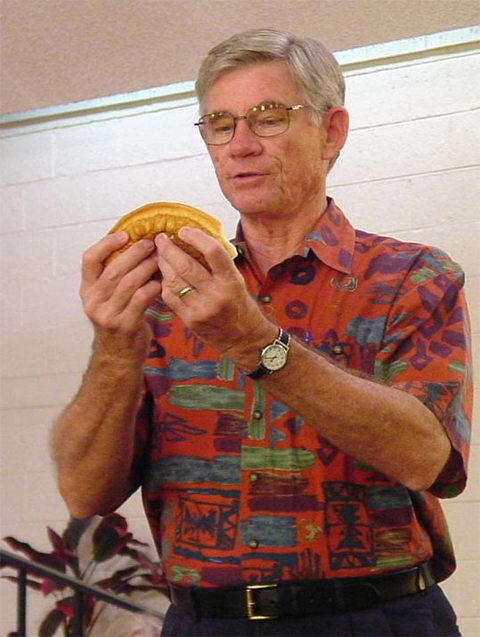 Former Academic Dean and Emeritus Professor of Church and Society at the Saint Paul School of Theology, Sample is a freelance lecturer, workshop leader, consultant, and storyteller. His books include Ministry in an Oral Culture: Living with Will Rogers, Uncle Remus, and Minnie Pearl, and co-editor of The Loyal Opposition: Struggling with the Church on Homosexuality. He is currently the coordinator of the Network for the Study of U.S. Lifestyles.
 Excerpted from Living the Questions 2.0,

 Living the Questions
You must be logged in to post a comment.